Russian oil
Ukraine strikes Russian oil sites with drones, but rising fuel prices may limit impact
Ukrainian drones are targeting oil facilities deep inside Russia, causing large fires, smoke visible from space and pollution affecting areas along the Black Sea coast.
The attacks are aimed at cutting Russia’s oil exports, a major source of funding for its ongoing war in Ukraine. However, the overall economic impact remains uncertain, as higher global oil prices linked to the Iran conflict and relaxed US sanctions have helped boost Moscow’s revenues.
Even so, the strikes are bringing the effects of the war closer to ordinary Russians living far from the battlefield.
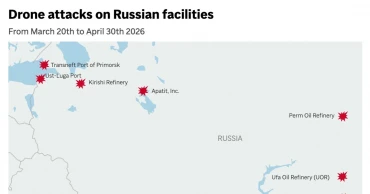
In the Black Sea town of Tuapse, Ukrainian drones struck an oil refinery and export terminal four times within just over two weeks. The attacks triggered fires, forced evacuations and sent thick smoke into the sky. Tuapse lies about 450 kilometers from the front lines.
After one of the strikes on April 18, local officials reported that burning oil spilled onto nearby streets, damaging vehicles.
Ukraine also said it hit an oil pumping station in Russia’s Perm region, more than 1,500 kilometers from Ukraine, on consecutive days. Russian authorities confirmed drone strikes on industrial sites but gave limited details.
Another major facility at Ust-Luga on the Baltic Sea, one of Russia’s largest oil and gas export hubs, was targeted three times within a week in late March. The site is over 800 kilometers from Ukraine.
Following the attacks, officials near St. Petersburg described the region as a “front-line area” due to increasing aerial threats.
Ukrainian President Volodymyr Zelenskyy said the strikes have caused Russia at least $7 billion in losses since the start of the year. He also cited intelligence reports indicating a drop in exports from key ports such as Ust-Luga and Primorsk.
Experts say the attacks have disrupted refining operations, while sanctions continue to limit Russia’s ability to replace damaged equipment.
However, Russia has also benefited from the global energy crisis. The International Energy Agency said Russian oil exports rose to 7.1 million barrels per day in March, while revenues nearly doubled to $19 billion due to higher prices.
Analysts say the dramatic explosions seen in attacks may not reflect the full level of damage. Strikes on storage tanks often create large fires but cause only temporary disruption, while critical infrastructure such as pumping systems appears to be better protected.
Ukraine’s ability to hit targets deep inside Russia highlights its expanding drone capabilities. Since the start of the full-scale war in 2022, Kyiv says it has significantly increased the range of its strike systems, allowing attacks from multiple directions and putting pressure on Russia’s air defenses.
These operations are also exposing more Russians to the realities of the war, which the Kremlin has often portrayed as distant.
The attacks have raised environmental concerns as well. Russian officials reported high levels of benzene in the air following fires and advised residents to stay indoors.
Locals have reported “black rain,” with oily droplets falling from the sky. Images shared in Russian media showed animals stained with oil and marine life affected along the coastline, including birds, fish and dolphins.
Environmental experts warn the damage could have lasting effects on public health and ecosystems, with oil pollution likely to return to shorelines during storms in the coming years.
So far, there has been little public protest inside Russia, partly due to strict controls on dissent. But analysts say public concern could grow if the environmental and economic impact worsens.
4 months ago
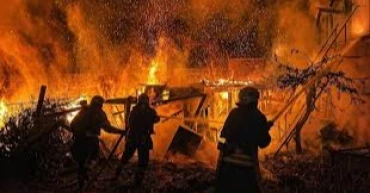
Another Russian oil facility burns as Ukraine expands long-range drone strikes
A Russian oil facility was reported on fire in the Perm region on Wednesday following what Ukrainian President Volodymyr Zelenskyy described as another long-range drone strike by Kyiv deep inside Russia.
Russian media said the blaze broke out at an industrial site in the Ural Mountains region, more than 1,500 kilometers from Ukraine. Some unconfirmed reports suggested it was a pumping station and storage complex. Perm regional governor Dmitry Makhonin said only that a drone hit an unspecified industrial facility, triggering a fire.
Russian authorities have not provided detailed information about Ukraine’s claims of expanding long-range drone operations or the growing precision of domestically produced drones.
The war has increasingly been shaped by drone warfare as Russia continues its large-scale invasion that has entered its fourth year. Ukraine has been focusing on expanding its drone capabilities for both strikes and defense.
Zelenskyy on Wednesday shared a video on Telegram showing thick black smoke rising near a populated area, though he did not confirm the location or target. He said Ukraine was extending the range of its long-distance strikes, calling it a new phase aimed at weakening Russia’s war capability by targeting its oil revenues.
He said the distance of the reported strike exceeded 1,500 kilometers and added that Ukraine would continue increasing the reach of its attacks. He also thanked Ukraine’s Security Service for what he called the precision of its operations.
The reported strike came a day after Ukraine hit the Tuapse oil refinery and terminal on Russia’s Black Sea coast for the third time in under two weeks. The attack prompted evacuations and raised concerns over environmental risks. Russian authorities said the fire there had been contained by Wednesday.
Ukraine has stepped up attacks on Russian energy infrastructure, aiming to disrupt revenue flows that support Moscow’s war effort. A Washington-based think tank, the Institute for the Study of War, said Ukraine is taking advantage of Russia’s vast territory and stretched air defenses to intensify such strikes, supported by increased domestic drone production.
Russia’s defence ministry said its air defenses intercepted 98 Ukrainian drones overnight across several regions and in Crimea, which Moscow annexed in 2014.
Meanwhile, Zelenskyy said Ukraine is now producing a surplus of some weapons and is preparing to expand cooperation with international partners on drone and missile production. He said discussions are underway with countries in the Middle East, Gulf, Europe and the Caucasus, and that Kyiv has also submitted proposals to the United States for joint defence cooperation.
Russia, however, continues its own long-range strikes on Ukraine. Ukrainian officials reported injuries and damage in several regions, including Kharkiv, Sumy and Odesa. Eight people were injured in Kharkiv region overnight, while a woman died in Sumy due to carbon monoxide poisoning linked to an attack. In Odesa, infrastructure and a hospital building were damaged.
Ukraine’s air force said it intercepted 154 of 171 drones launched by Russia overnight.
4 months ago
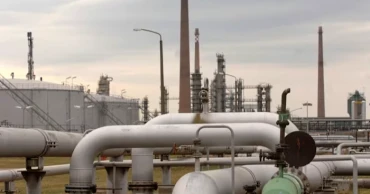
Russian oil flow to Slovakia resumes via Ukraine pipeline after three months
The supply of Russian oil to Slovakia through the Druzhba pipeline crossing Ukraine has resumed, Slovak Economy Minister Denisa Saková said on Thursday.
The flow restarted at 2 a.m. on Thursday after remaining suspended for about three months.
Hungary and Slovakia have been in an escalating dispute with Ukraine since Russian oil deliveries to both countries were halted in January.
Unlike most European Union members, Hungary and Slovakia still rely heavily on Russian energy supplies.
Both countries have accused Ukraine of not repairing damage to the pipeline. Hungary has blocked a large European Union loan intended for war-hit Ukraine, while Slovakia had refused to support new sanctions against Russia until oil supplies resumed.
4 months ago
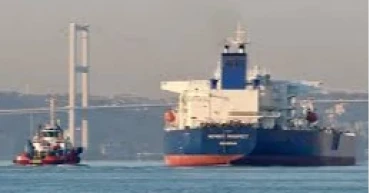
US extends waiver for purchase of Russian oil
The United States has extended a waiver permitting countries to continue purchasing Russian oil and petroleum products at sea for roughly another month, as the Trump administration seeks to stabilise global oil supplies amid disruptions linked to the conflict with Iran.
According to a notice from the US Treasury Department, the extension allows transactions involving Russian oil loaded onto vessels as of Friday to continue until May 16.
The earlier waiver had been due to expire on April 11, reports Al Jazeera.
Russia’s presidential envoy Kirill Dmitriev previously said the initial waiver could release around 100 million barrels of crude into the market—nearly equivalent to one day of global oil production.
However, the decision has drawn criticism in some Western circles. European Commission President Ursula von der Leyen, among others, argued that such measures could undermine sanctions aimed at cutting off revenue streams that Russia has used to finance its war in Ukraine.
5 months ago

G-7 and EU agree to cap the price of Russian oil at $60 per barrel
The Group of Seven nations and Australia joined the European Union on Friday in adopting a $60-per-barrel price cap on Russian oil, a key step as Western sanctions aim to reorder the global oil market to prevent price spikes and starve President Vladimir Putin of funding for his war in Ukraine.
Europe needed to set the discounted price that other nations will pay by Monday, when an EU embargo on Russian oil shipped by sea and a ban on insurance for those supplies take effect. The price cap, which was led by the G-7 wealthy democracies, aims to prevent a sudden loss of Russian oil to the world that could lead to a new surge in energy prices and further fuel inflation.
U.S. Treasury Secretary Janet Yellen said in a statement that the agreement will help restrict Putin’s “primary source of revenue for his illegal war in Ukraine while simultaneously preserving the stability of global energy supplies.”
The agreement comes after a last-minute flurry of negotiations. Poland long held up an EU agreement, seeking to set the cap as low as possible. Following more than 24 hours of deliberations, when other EU nations had signaled they would back the deal, Warsaw finally relented late Friday.
A joint G-7 coalition statement released Friday states that the group is “prepared to review and adjust the maximum price as appropriate," taking into account market developments and potential impacts on coalition members and low and middle-income countries.
“Crippling Russia’s energy revenues is at the core of stopping Russia’s war machine,” Estonian Prime Minister Kaja Kallas said, adding that she was happy the cap was pushed down a few extra dollars from earlier proposals. She said every dollar the cap was reduced amounted to $2 billion less for Russia's war chest.
Also read: What’s the effect of Russian oil price cap, ban?
“It is no secret that we wanted the price to be lower," Kallas added, highlighting the differences within the EU. “A price between 30-40 dollars is what would substantially hurt Russia. However, this is the best compromise we could get.”
The $60 figure sets the cap near the current price of Russia’s crude, which recently fell below $60 a barrel. Some criticize that as not low enough to cut into one of Russia's main sources of income. It is still a big discount to international benchmark Brent, which slid to $85.48 a barrel Friday, but could be high enough for Moscow to keep selling even while rejecting the idea of a cap.
There is a big risk to the global oil market of losing large amounts of crude from the world’s No. 2 producer. It could drive up gasoline prices for drivers worldwide, which has stirred political turmoil for U.S. President Joe Biden and leaders in other nations. Europe is already mired in an energy crisis, with governments facing protests over the soaring cost of living, while developing nations are even more vulnerable to shifts in energy costs.
But the West has faced increasing pressure to target one of Russia's main moneymakers — oil — to slash the funds flowing into Putin's war chest and hurt Russia's economy as the war in Ukraine drags into a ninth month. The costs of oil and natural gas spiked after demand rebounded from the pandemic and then the invasion of Ukraine unsettled energy markets, feeding Russia's coffers.
U.S. National Security Council spokesman John Kirby told reporters Friday that “the cap itself will have the desired effect on limiting Mr. Putin’s ability to profit off of oil sales and limit his ability to continue to use that money to fund his war machine.”
More uncertainty is ahead, however. COVID-19 restrictions in China and a slowing global economy could mean less thirst for oil. That is what OPEC and allied oil-producing countries, including Russia, pointed to in cutting back supplies to the world in October. The OPEC+ alliance is scheduled to meet again Sunday.
That competes with the EU embargo that could take more oil supplies off the market, raising fears of a supply squeeze and higher prices. Russia exports roughly 5 million barrels of oil a day.
Putin has said he would not sell oil under a price cap and would retaliate against nations that implement the measure. However, Russia has already rerouted much of its supply to India, China and other Asian countries at discounted prices because Western customers have avoided it even before the EU embargo.
Most insurers are located in the EU or the United Kingdom and could be required to participate in the price cap.
Russia also could sell oil off the books by using “dark fleet” tankers with obscure ownership. Oil could be transferred from one ship to another and mixed with oil of similar quality to disguise its origin.
Even under those circumstances, the cap would make it “more costly, time-consuming and cumbersome” for Russia to sell oil around the restrictions, said Maria Shagina, a sanctions expert at the International Institute for Strategic Studies in Berlin.
Robin Brooks, chief economist at the Institute of International Finance in Washington, said the price cap should have been implemented when oil was hovering around $120 per barrel this summer.
“Since then, obviously oil prices have fallen and global recession is a real thing,” he said. “The reality is that it is unlikely to be binding given where oil prices are now.”
European leaders touted their work on the price cap, a brainchild of Yellen.
“The EU agreement on an oil price cap, coordinated with G7 and others, will reduce Russia’s revenues significantly,” said Ursula von der Leyen, president of the European Commission, the EU's executive arm. “It will help us stabilize global energy prices, benefiting emerging economies around the world.”
3 years ago

After hiking fuel price by 30%, Indonesia considering buying cheap Russian oil
Joko Widodo, President of Indonesia, is contemplating buying Russian oil to ease the burden of rising energy prices.
In an interview with the Financial Times, Widodo said, “We always monitor all of the options. If there is the country (and) they give a better price, of course,”
Widodo raised the price of subsidised fuel by 30% earlier this month, citing financial concerns as the reason for the price increase.
Read: Indonesia hikes fuel prices by 30%, cuts energy subsidies
Thousands of protestors gathered last week in Jakarta and other major cities to condemn the government’s decision to reduce fuel subsidies. The 270 million-strong nation was rocked by demonstrations after the decision.
However, any decision to buy Russian crude oil at a price higher than the G7-agreed price cap could result in US penalties against Indonesia.
Sandiaga Uno, Indonesia’s minister of tourism, claimed in August that Indonesia had received a 30% discount on Russian petroleum. The nation’s state-owned oil corporation, Pertamina, then declared that it was examining the risks of acquiring Russian oil.
Read: Special Presidential Envoy for Climate Kerry to visit Greece, Indonesia, Vietnam
Due to rising food costs, Indonesia, the largest economy in Southeast Asia, reported annual inflation of 4.7% in August.
4 years ago

Bangladesh may prefer to import Russian oil via third country
Bangladesh may prefer to import Russian oil via a third country to avert possible risks of the business.
According to official sources at the Ministry of Power, Energy and Mineral Resources, neighboring India might be such a preferred third country with regard to importing Russian oil.
"Currently, India has been importing Russian oil defying the US sanctions while Bangladesh has a long term contract with India to import refined oil from its refinery at Numaligarh in Assam state, '' said an official at the ministry preferring anonymity.
“If there is a bilateral arrangement between the two nations, such a business is very much possible,” he said, adding it could be a possible way to avert the risk in import of Russian oil at a cheaper rate.
The possibility of importing petroleum fuel from Russia came into discussion at the policymaking level following an offer from a Russian company to sell its refined petroleum, specially diesel, at a cheaper rate to Bangladesh.
Russneft, a Russian oil company headquartered in Moscow, recently offered the state-owned Bangladesh Petroleum Corporation (BPC) petroleum fuels at $59 per barrel against a global market price of over $100 per barrel.
As per the offer, the Russian company will reach its refined petroleum to Chattagram port at the rate which includes the premium and shipping cost as well.
However, the Ministry of Power, Energy and Mineral Resources has not yet officially disclosed anything about the Russian company’s offer.
State Minister for Power, Energy and Mineral Resources Nasrul Hamid declined to give any detail of such an offer.
Read: Russian oil shipments to central Europe expected to resume
“No more update as yet,” he told UNB on Thursday.
Sources at the BPC said the import of Russian oil is not like fuel import from other countries.
They said Bangladesh is assessing its possible risks to import petroleum fuels from Russia as such imports may invite anger from the USA and its Western allies.
Russia has been facing huge economic sanctions from the USA and its European allies following its war with Ukraine.
If any country directly imports Russian oil it may face similar sanctions, said the officials, adding that is why any move in this regard will not only depend on the decision of the Ministry of Power, Energy and Mineral Resources.
According to official sources, after receiving the offer from Russia on petroleum fuel sale, now different concerned ministries including the Ministry of Foreign Affairs, Ministry of Finance and the Ministry of Power, Energy and Mineral Resources are assessing the potential risks and different processes of such import.
Prime Minister Sheikh Hasina at the ECNEC meeting on August 16 said that the government wants to buy fuel oil, fertilizer and wheat from Russia.
In this connection she mentioned she had given the responsibility to her Principal Secretary to talk to the Russian Ambassador regarding the matter.
“The Foreign Ministry can take initiative in this matter, we will procure fuel oil from them (Russia) with our own funds as the SWIFT is closed and the price of dollar is very high,” she said.
Meanwhile, Power Cell director Mohammad Hossain said that if the government can manage the import of diesel at cheaper rate, operation of the diesel-run power plants will be resumed to increase the power generation.
As part of an austerity measure, the government suspended the operation of the diesel-fired power plants from July 19 and introduced area-wise load shedding to reduce diesel imports and save foreign currency.
Although area-based load-shedding was scheduled for one hour, it continued for three hours at a time in some city areas across the country. Load-shedding in rural and remote areas, however, stretched for more hours, consumers claim.
Markets and shopping malls can now stay open until 8:00 pm. The government also prohibited illumination in different social gatherings in community centers, shopping malls, shops, offices and houses since July 7.
Finally, it introduced a holiday staggering for industries on August 11 as part of the plan to save power and natural gas.
4 years ago
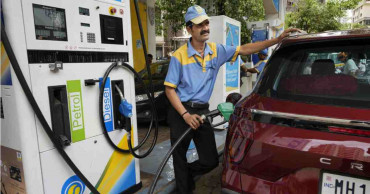
India, China growing markets for shunned Russian oil
India and other Asian nations are becoming an increasingly vital source of oil revenues for Moscow despite strong pressure from the U.S. not to increase their purchases, as the European Union and other allies cut off energy imports from Russia in line with sanctions over its war on Ukraine.
Such sales are boosting Russian export revenues at a time when Washington and allies are trying to limit financial flows supporting Moscow’s war effort.
India, an oil-hungry country of 1.4 billion people, has guzzled nearly 60 million barrels of Russian oil in 2022 so far, compared with 12 million barrels in all of 2021, according to commodity data firm Kpler. Shipments to other Asian countries, like China, have also increased in recent months but to a lesser extent.
In an interview with The Associated Press, Sri Lanka’s prime minister said he may be compelled to buy more oil from Russia as he hunts desperately for fuel to keep the country running amid a dire economic crisis.
Prime Minister Ranil Wickremesinghe said Saturday said he would first look to other sources, but would be open to buying more crude from Moscow. In late May, Sri Lanka bought a 90,000-metric-ton (99,000-ton) shipment of Russian crude to restart its only refinery.
Read: WTO holds big meeting to tackle vaccines, food shortages
Since Russia’s invasion in late February, global oil prices have soared, giving refiners in India and other countries an added incentive to tap oil Moscow is offering them at steep discounts of $30 to $35, compared with Brent crude and other international oil now trading at about $120 per barrel.
Their importance to Russia rose after the 27-nation European Union, the main market for fossil fuels that supply most of Moscow’s foreign income, agreed to stop most oil purchases by the end of this year.
“It seems a distinct trend is becoming ingrained now,” said Matt Smith, lead analyst at Kpler tracking Russian oil flows. As shipments of Urals oil to much of Europe are cut, crude is instead flowing to Asia, where India has become the top buyer, followed by China. Ship tracking reports show Turkey is another key destination.
“People are realizing that India is such a refining hub, taking it at such a cheap price, refining it and sending it out as clean products because they can make such strong margins on that,” Smith said.
In May, some 30 Russian tankers loaded with crude made their way to Indian shores, unloading about 430,000 barrels per day. An average of just 60,000 barrels per day arrived in January-March, according to the Helsinki, Finland-based Centre for Research on Energy and Clean Air, an independent think tank.
Chinese state-owned and independent refiners also have stepped up purchases. In 2021, China was the largest single buyer of Russian oil, taking 1.6 million barrels per day on average, equally divided between pipeline and seaborne routes, according to the International Energy Agency.
While India’s imports are still only about a quarter of that, the sharp increase since the war began is a potential source of friction between Washington and New Delhi.
The U.S. recognizes India’s need for affordable energy, but “we’re looking to allies and partners not to increase their purchases of Russian energy,” Secretary of State Antony Blinken said after a meeting of U.S. and Indian foreign and defense ministers in April.
Meanwhile, the U.S. and its European allies are engaged in “extremely active” discussions on coordinating measures, perhaps forming a cartel, to try to set a price cap on Russian oil, Treasury Secretary Janet Yellen told a Senate Finance Committee meeting on Tuesday.
The aim would be to keep Russian oil flowing into the global market to prevent crude oil prices, already up 60% this year, from surging still higher, she said.
Read: UN elects new council members including Japan, Switzerland
“Absolutely, the objective is to limit the revenue going to Russia,” Yellen said, indicating the exact strategy had not yet been decided on.
While Europe could find alternative sources for its purchases of about 60% of Russia’s crude exports, Russia also has options.
India’s foreign minister, Subrahmanyam Jaishankar, has emphasized his country’s intention to do what is in its best interests, bristling at criticism over its imports of Russian oil.
“If India funding Russian oil is funding the war … tell me, then buying Russian gas is not funding the war? Let’s be a little even-handed,” he said at a recent forum in Slovakia, referring to Europe’s imports of Russian gas.
India’s imports of crude from Russia rose from 100,000 barrels per day in February to 370,000 a day in April to 870,000 a day in May.
A growing share of those shipments displaced oil from Iraq and Saudi Arabia, most of it going to refineries in Sika and Jamnagar on India’s western coast. Up until April, Russian oil accounted for less than 5% of the crude processed at the Jamnagar oil refinery run by Reliance Industries. In May, it accounted for more than a quarter, according to Centre for Research on Energy and Clean Air.
India’s exports of oil products like diesel have risen to 685,000 barrels per day from 580,000 barrels per day before the invasion of Ukraine. Much of its diesel exports are sold in Asia, but about 20% was shipped via the Suez Canal, headed for the Mediterranean or Atlantic, essentially Europe or the US, said Lauri Myllyvirta, a lead analyst at CREA.
It’s impossible to quantify the exact amount of Russian crude in refined products being shipped out of India, he said. Still, “India is providing an outlet for Russian crude oil to get through the market,” he said.
China’s imports also have risen further this year, helping Russian President Vladimir Putin’s government record a current account surplus, the broadest measure of trade, of $96 billion for the four months ending in April.
It’s unclear if such exports might eventually be subject to sanctions meant to cut the cash flowing to Russia.
Regarding the sanctions, “Are those measures effective? And if not, how is the oil market working around them?” Myllyvirta said.
4 years ago

EU leaders agree to ban 90% of Russian oil by year-end
European Union leaders agreed Monday to embargo most Russian oil imports into the bloc by year-end as part of new sanctions on Moscow worked out at a summit focused on helping Ukraine with a long-delayed package of new financial support.
The embargo covers Russian oil brought in by sea, allowing a temporary exemption for imports delivered by pipeline, a move that was crucial to bring landlocked Hungary on board a decision that required consensus.
EU Council President Charles Michel said the agreement covers more than two-thirds of oil imports from Russia. Ursula Von der Leyen, the head of the EU's executive branch, said the punitive move will “effectively cut around 90% of oil imports from Russia to the EU by the end of the year.”
Michel said leaders also agreed to provide Ukraine with a 9 billion-euro ($9.7 billion) tranche of assistance to support the war-torn country's economy. It was unclear whether the money would come in grants or loans.
Mikhail Ulyanov, Russia’s permanent representative to international organizations in Vienna, responded to the EU’s decision on Twitter, saying: “As she rightly said yesterday, Russia will find other importers.”
The new package of sanctions will also include an asset freeze and travel ban on individuals, while Russia’s biggest bank, Sberbank, will be excluded from SWIFT, the major global system for financial transfers from which the EU previously banned several smaller Russian banks. Three big Russian state-owned broadcasters will be prevented from distributing their content in the EU.
Also read: Russians, Ukrainians fight block by block in eastern city
“We want to stop Russia's war machine," Michel said, lauding what he called a “remarkable achievement."
“More than ever it’s important to show that we are able to be strong, that we are able to be firm, that we are able to be tough,” he added.
Michel said the new sanctions, which needed the support of all 27 member countries, will be legally endorsed by Wednesday.
The EU had already imposed five previous rounds of sanctions on Russia over its war. It has targeted more than 1,000 people individually, including Russian President Vladimir Putin and top government officials as well as pro-Kremlin oligarchs, banks, the coal sector and more.
But the sixth package of measures announced May 4 had been held up by concerns over oil supplies.
The impasse embarrassed the bloc, which was forced to scale down its ambitions to break Hungary's resistance. When European Commission President Ursula von der Leyen proposed the package, the initial aim was to phase out imports of crude oil within six months and refined products by the end of the year.
Both Michel and von der Leyen said leaders will soon return to the issue, seeking to guarantee that Russia’s pipeline oil exports to the EU are banned at a later date.
Hungarian Prime minister Viktor Orban had made clear he could support the new sanctions only if his country’s oil supply security was guaranteed. Hungary gets more than 60% of its oil from Russia and depends on crude that comes through the Soviet-era Druzhba pipeline.
Von der Leyen had played down the chances of a breakthrough at the summit. But leaders reached a compromise after Ukrainian President Volodymyr Zelenskyy urged them to end “internal arguments that only prompt Russia to put more and more pressure on the whole of Europe.”
The EU gets about 40% of its natural gas and 25% of its oil from Russia, and divisions over the issue exposed the limits of the 27-nation trading bloc’s ambitions.
In his 10-minute video address, Zelenskyy told leaders to end “internal arguments that only prompt Russia to put more and more pressure on the whole of Europe.”
He said the sanctions package must “be agreed on, it needs to be effective, including (on) oil,” so that Moscow “feels the price for what it is doing against Ukraine" and the rest of Europe. Only then, Zelenskyy said, will Russia be forced to “start seeking peace.”
Also read: Russia takes small cities, aims to widen east Ukraine battle
It was not the first time he had demanded that the EU target Russia’s lucrative energy sector and deprive Moscow of billions of dollars each day in supply payments.
But Hungary led a group of EU countries worried over the impact of the oil ban on their economy, including Slovakia, the Czech Republic and Bulgaria. Hungary relies heavily on Russia for energy and can't afford to turn off the pumps. In addition to its need for Russian oil, Hungary gets 85% of its natural gas from Russia.
Orban had been adamant on arriving at the summit in Brussels that a deal was not in sight, stressing that Hungary needed its energy supply secured.
Von der Leyen and Michel said the commitment by Germany and Poland to phase out Russian oil by the end of the year and to forgo oil from the northern part of the Druzhba pipeline will help cut 90% of Russian oil imports.
The issue of food security will be on the table Tuesday, with the leaders set to encourage their governments to speed up work on “solidarity lanes” to help Ukraine export grain and other produce.
4 years ago
.jpg)
Zelenskyy: Russian oil ban key step to peace
Ukrainian President Volodymyr Zelenskyy said Friday that existing sanctions on Russia are “painful” but not yet enough to stop the Russian military.
Zelenskyy called for “the democratic world” to ban Russian oil. While U.S. lawmakers and U.S. President Joe Biden have enacted such a ban, Europe relies more heavily on Russian energy supplies, and the U.S. has been working to keep India from stepping up its use of Russian energy.
“In general, the democratic world must accept that Russia’s money for energy resources is in fact money for the destruction of democracy,” Zelenskyy said in his nightly video address to his nation.
Read: More than 10,000 civilians dead in Ukraine port city: Mayor
He also said: “The sooner the democratic world recognizes that the oil embargo against Russia and the complete blockade of its banking sector are necessary steps towards peace, the sooner the war will end.”
Also read: Biden urges Modi not to step up Indian use of Russian oil
4 years ago