Asian stocks mixed
Oil prices rise, Asian stocks mixed amid renewed Middle East violence
Oil prices rose further and Asian stock markets moved in different directions Tuesday as renewed violence in the Middle East increased uncertainty over the future of the conflict.
The latest escalation came after more than a month without major fighting in the Iran war, raising concerns about possible disruptions to oil supplies and global markets.
Shares of online fast-fashion company Shein fell sharply after beginning trading in Hong Kong on Tuesday. The stock dropped as much as 10% before recovering slightly to trade about 5% lower by midday.
Brent crude, the international oil benchmark, rose 0.8% to $91.23 a barrel. It had gained 2.7% on Monday after the United States struck rocket launchers on an Iranian island, saying they were preparing to place mines in the Strait of Hormuz.
Iran responded by firing missiles at US positions in Jordan, all of which were intercepted, according to US officials.
The conflict has already reduced shipping through the Strait of Hormuz, a key global oil route that previously carried about one-fifth of the world’s oil shipments.
The disruption has kept oil prices elevated and increased costs for consumers, from fuel to goods transported by sea.
US benchmark crude rose 1% to $86.62 a barrel.
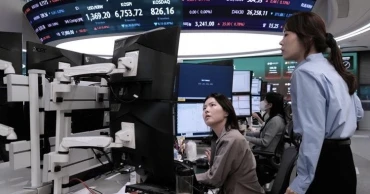
Asian markets were mixed. Hong Kong’s Hang Seng index fell 0.9% to 25,332.10, while Shanghai’s Composite index was almost unchanged at 3,985.93.
Tokyo’s Nikkei 225 gained 0.2% to 66,420.26, while South Korea’s Kospi rose more than 0.2% to 6,835.51.
Australia’s S&P/ASX 200 slipped 0.1% to 9,066.40. Taiwan’s Taiex added 0.2%, while India’s Sensex gained 0.3%.
US stock futures were up 0.1%.
Wall Street ends August lowerUS stocks finished August on a weaker note Monday, with the S&P 500 falling 0.3%. The Dow Jones Industrial Average dropped 0.7%, while the Nasdaq composite declined 0.1%.
Most sectors of the S&P 500 ended lower.
Edison International fell 23.1% and PG&E dropped 20.1%, the two biggest declines in the index. The losses followed reports about proposed California wildfire legislation that could allow insurers to seek compensation from utility companies over wildfire-related claims.
Energy companies, however, benefited from higher oil prices. Exxon Mobil gained 2.7%, while Chevron rose 2.1%.
Higher energy costs are also adding to inflation, which remains above the Federal Reserve’s 2% target.
Persistent inflation has put pressure on household budgets and consumer confidence while making the central bank’s decisions on interest rates more difficult.
The yield on the two-year US Treasury note remained at 4.34% Monday. It has risen considerably from around 3.50% at the start of 2026.
The yield on the 10-year Treasury note increased to 4.75% from 4.73% late Friday.
Investors are also watching the US jobs market closely. The government is expected to release August employment figures later this week.
The US job market unexpectedly weakened in July, with employers cutting 23,000 jobs. Government revisions also showed 103,000 fewer jobs were added in May and June than previously reported.
The Federal Reserve faces a difficult balance: raising interest rates could help control inflation, but higher borrowing costs could also weaken the job market.
In early Tuesday trading, the US dollar rose to 159.94 Japanese yen from 159.74 yen. The euro fell slightly to $1.1604 from $1.1619.
1 month ago

Asian stocks mixed, oil falls as Russian attacks intensify
Stocks were mixed in Asia and oil prices fell Monday as uncertainty over the war in Ukraine and persistently high inflation kept investors guessing about what lies ahead.
Tokyo and Sydney advanced while Hong Kong, Seoul and Shanghai declined. U.S. futures were higher.
Ukrainian President Volodymyr Zelenskyy vowed to keep negotiating with Russia, as Russian forced bombarded a military training base near the Polish border, killing nine and wounding dozens of people. Talks aimed at reaching a cease-fire failed again on Saturday,
Russia’s widening of its offensive to the western part of Ukraine comes amid warnings over the widening impact from the conflict. Moody’s Investor Service said it was reviewing its credit ratings for both countries in view of rising security, economic and financial risks.
Read: Brent crude up $10, shares sink as Ukraine conflict deepens
Spreading outbreaks of coronavirus in China have added to uncertainties, with authorities ordering a lockdown in the technology and manufacturing hub of Shenzhen, near Hong Kong, that could worsen supply chain disruptions.
Hong Kong’s Hang Seng index lost 3.8% to 19,779.91 and the Shanghai Composite index slipped 1.3% to 3,266.73.
Chinese shares have also come under selling pressure due to the threat of de-listings of major Chinese companies on U.S. stock exchanges. A report in the state-run newspaper Economic Daily said Monday that regulators are negotiating to resolve a dispute over auditing rules.
The Securities and Exchange Commission has moved to require that U.S.-listed foreign stocks disclose their ownership structures and audit reports. That has come on top of technology-related sanctions against some companies.
Wang Sheng, head of the investment banking division at China International Capital Corp, said in an opinion piece that China and the U.S. should be able to strike a deal.
Tokyo’s Nikkei 225 index rose 0.6% to 25,318.75 and the S&P/ASX 200 gained 1.2% to 7,147.80. South Korea’s Kospi lost 0.9% to 2,637.07.
On Friday, the S&P 500 fell 1.3% to 4,204.31. The Dow Jones Industrial Average lost 0.7% to 32,944.19, while the Nasdaq composite index gave up 2.2% to 12,843.81. The Russell 2000 index of smaller companies slipped 1.6% to 1,979.67.
World markets have been rocked by dramatic reversals as investors struggle to guess how Russia’s invasion of Ukraine will affect prices of oil, wheat and other commodities produced in the region.
Read: World shares drop after Putin orders troops to east Ukraine
That’s raising the risk the U.S. economy may struggle under a toxic combination of persistently high inflation and stagnating growth. The Federal Reserve is expected to raise interest rates at its meeting this week as it and other central banks act to stamp out the highest inflation in generations, while trying to avoid causing a recession by raising rates too high or too quickly.
Amid all the uncertainty, U.S. stocks remain about 10% below their peak from earlier this year, while crude oil prices remain more than 40% higher for 2022 so far.
U.S. benchmark crude oil lost $3.16 to $106.17 per barrel in electronic trading on the New York Mercantile Exchange. It surged $3.31 per barrel on Friday to $109.33 per barrel.
Brent crude oil, the standard for international pricing, declined $3.05 to $109.59 per barrel.
The U.S. dollar rose to 117.83 Japanese yen from 117.35 yen. The euro weakened to $1.0906 from $1.0926.
4 years ago