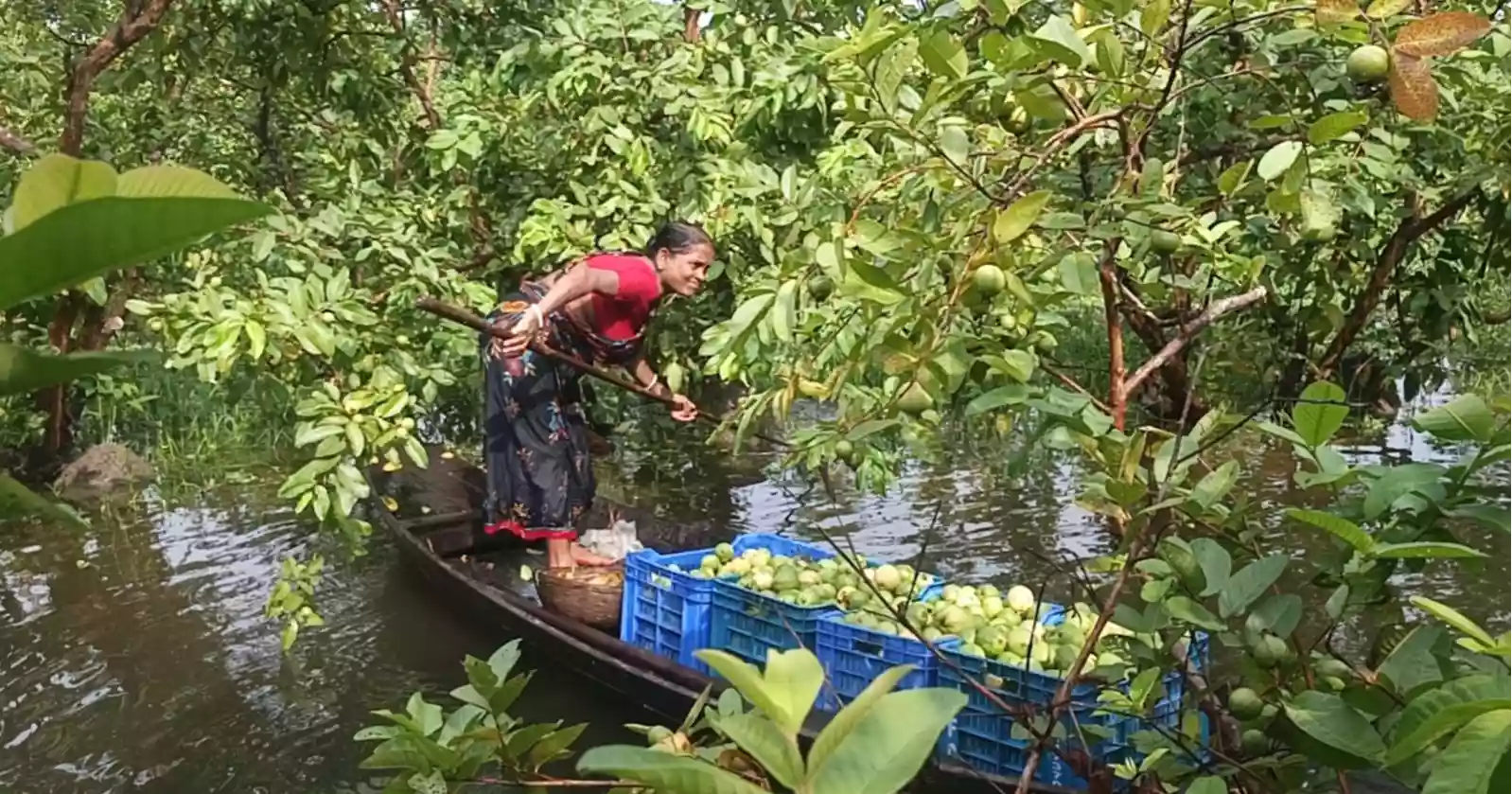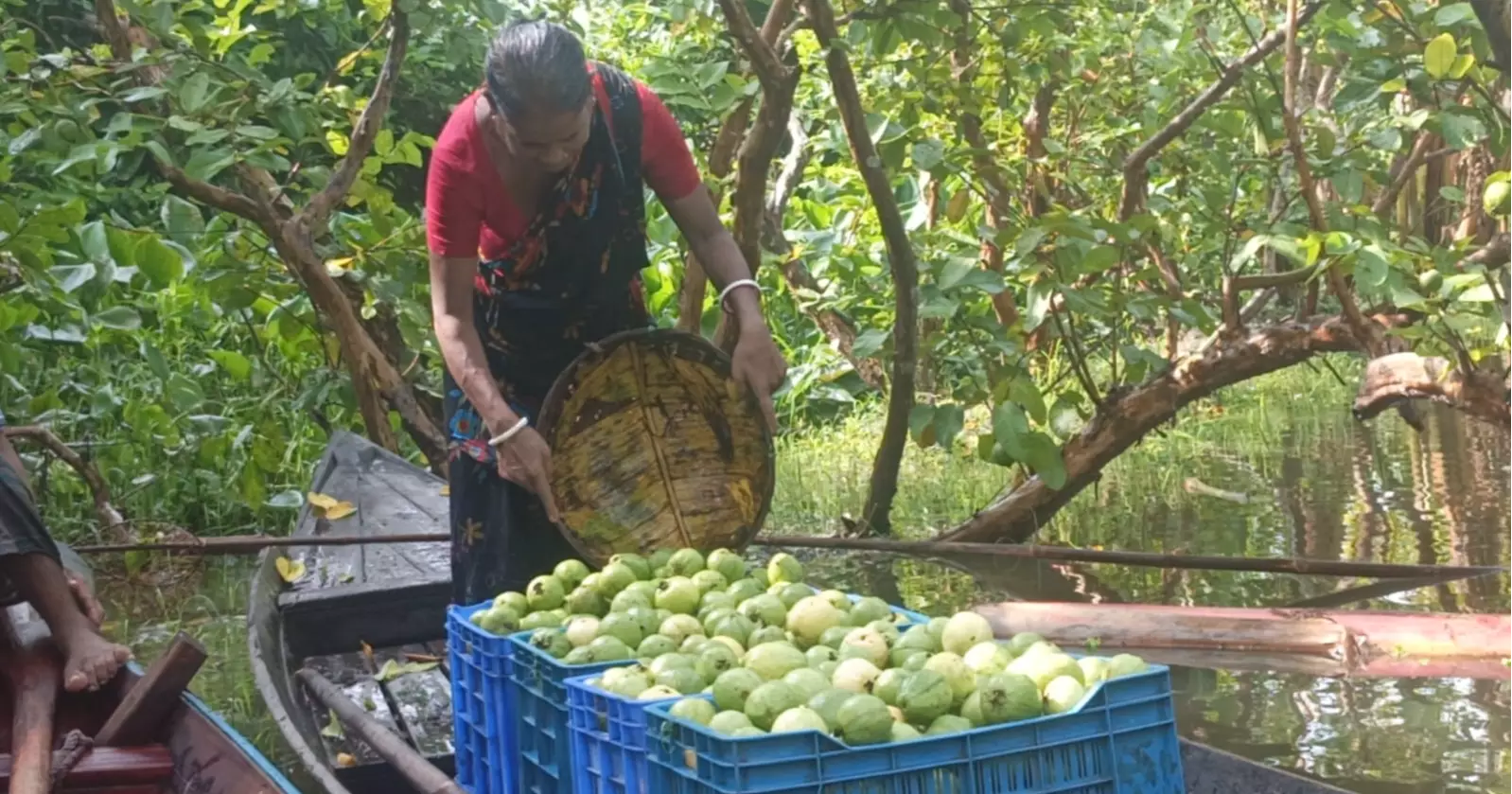
Hidden among a maze of canals in Pirojpur's Nesarabad upazila lies one of Bangladesh's most picturesque agricultural landscapes, where lush guava orchards, bustling boats and a century-old floating market come together every monsoon to create a unique blend of nature, tradition and rural commerce.
The Kuriana, Atghar and Bhimruli areas are among the country's largest guava-producing regions and have long been known as the "Apple Kingdom of Bengal."
With a history spanning nearly two centuries, the orchards have become a symbol of the area's rich agricultural heritage.
During the Bengali months of Shraban and Bhadra, the famous floating market at Bhimruli turns into the centre of economic activity. Farmers from Kuriana, Atghar, Bhimruli, Jalabari, Dhalhar and nearly 20 kilometres of surrounding areas arrive at dawn in boats loaded with freshly harvested guavas, along with hog plums (amra), lemons, bananas, vegetables and other farm produce.
Trading begins early in the morning and continues until noon, as hundreds of boats crowd the canals, creating a vibrant floating marketplace that has become one of Bangladesh's most iconic rural attractions.
The waterways lined with endless rows of guava trees offer visitors a rare opportunity to travel through narrow canals by small boats, pick fresh fruit directly from the orchards and witness a traditional market operating entirely on water.
The region's popularity has increased significantly in recent years, driven by social media exposure and growing domestic tourism. Every monsoon, thousands of visitors travel to Bhimruli to experience the floating market and the surrounding orchards.
The tourism boom has also transformed the fortunes of local farmers.