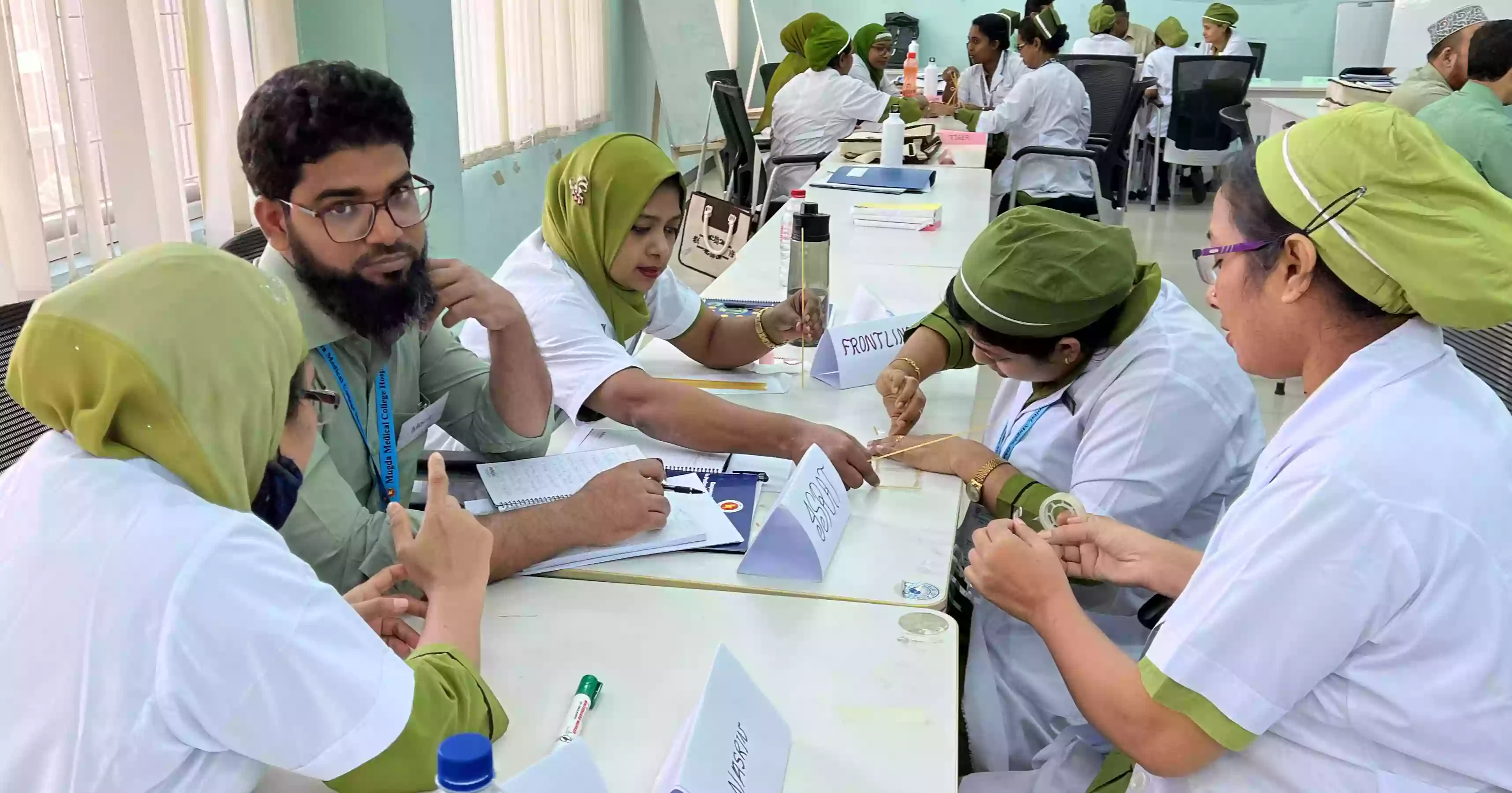
The government has undertaken a series of measures to improve the quality of nursing and midwifery education, including expanding teacher training, modernising laboratories and ensuring adequate clinical practice facilities, according to a Health Ministry document.
The initiatives have been taken as part of the government’s broader plan to develop human resources, protect public health, expand and modernise medical and nursing education and ensure healthcare services at all levels, the document said.
The urgency is underscored by the country’s relatively low nursing workforce density. Bangladesh had only 0.7 nurses and midwives per 1,000 people in 2023, according to World Bank data based on the World Health Organization’s Global Health Workforce Statistics.
A 2025 report citing the Health Sector Reform Commission said Bangladesh required around 310,500 nurses but had only 56,734, representing an estimated 82 percent shortfall under that assessment.
Against this backdrop, the government is putting greater emphasis on the quality of nursing education, particularly the capacity of teachers who train future nurses and midwives.
As part of efforts to expand education and training opportunities for nursing and midwifery teachers, a Nurse Teachers Training Centre was established in Mohakhali, Dhaka, in 2025.
So far, one batch comprising 30 trainees has successfully completed a one-year Teachers Training Certificate Course at the centre, while training of another two batches involving a total of 60 trainees is currently under way, according to the ministry.
The government has also been providing shorter professional development programmes to strengthen the knowledge, skills and work performance of nursing and midwifery teachers.
So far, 1,174 teachers have completed a 28-day Teachers Development Training programme, the document said.
The ministry said further steps have also been taken under the ASSET (Accelerating and Strengthening Skills for Economic Transformation) project to strengthen the professional capacity of teachers working at nursing and midwifery educational institutions.
Under the project, 227 teachers from nursing and midwifery institutions that received Institutional Development Grants (IDG) have already received training in intensive care unit (ICU) care, paediatrics and nursing management.
The government has also taken steps to provide similar training to another 320 teachers by March 2027, it said.
The ministry said the measures are aimed at ensuring that nursing and midwifery teachers remain equipped with updated professional knowledge and practical skills required for modern healthcare delivery.
Infrastructure development is another major component of the government’s efforts to improve nursing education.
Under the ASSET project, funds have been allocated for the modernisation of laboratories at 31 nursing and midwifery educational institutions.
The laboratory modernisation programme is expected to be completed by February 2027, according to the ministry document.
The government has also highlighted the availability of clinical practice facilities for students enrolled in nursing institutions.
There are currently 73 nursing education and training institutions under the Directorate General of Nursing and Midwifery (DGNM), and students at these institutions have access to adequate opportunities for clinical practice, the document said.
The ministry said practical clinical exposure is essential for developing the competence of nursing students and complementing their theoretical education.
It said the existing nursing education curriculum has been designed in line with the requirements of modern, competency-based nursing education.
The curriculum is also largely aligned with internationally recognised standards for nursing education and training, according to the document.
The curriculum places emphasis on developing students’ theoretical knowledge, practical skills, clinical competency and professional capacity, it said.
The ministry said the combined initiatives in teacher training, laboratory modernisation, clinical practice and curriculum development are intended to strengthen the overall quality of nursing and midwifery education and help produce a skilled workforce capable of meeting the country’s growing healthcare needs.
The expansion of training facilities and professional development opportunities is also expected to contribute to improving the quality of healthcare services by strengthening the competencies of nursing and midwifery professionals.