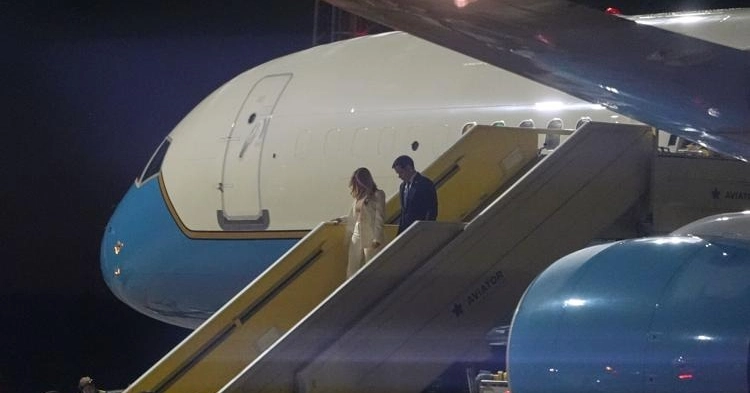
US Secretary of State Marco Rubio is heading to Europe on Thursday on a mission to reassure nervous US allies as uncertainty grows over Washington’s NATO policy, troop levels, and shifting positions on European defence.
Rubio will attend a NATO foreign ministers’ meeting in Sweden on Friday, while senior Pentagon officials are expected to brief the 32-member alliance in Brussels on US military commitments in Europe. The meetings come ahead of a NATO leaders’ summit in Turkey in July.
The diplomatic push comes at a time of growing global uncertainty, including the ongoing Iran war and stalled efforts to end the Russia-Ukraine conflict. Tensions have also risen in Europe over US President Donald Trump’s criticism of NATO allies and his interest in Greenland, a territory of NATO member Denmark.
Rubio has frequently been deployed by the Trump administration to ease concerns at international meetings, including earlier visits to the Munich Security Conference and Italy.
Confusion over US troop levels in Europe
Before leaving for Sweden, Rubio declined to clarify possible changes to US troop deployments in Europe, including under NATO’s defence planning framework.
Recent moves by the Trump administration have added to confusion. Plans to send thousands of US troops to Poland and Germany were paused or canceled, but Trump later announced on social media that 5,000 additional troops would be sent to Poland.
It remains unclear whether this means a resumption of previously halted deployments, an expansion of forces, or a broader reshaping of US troop levels across Europe. The Pentagon referred questions to the White House, which did not immediately respond.
Rubio, however, acknowledged frustration within the administration over NATO’s role, particularly in relation to the Iran conflict.
He said President Trump and other officials were “very disappointed” with the alliance.
While reaffirming that he supports NATO, Rubio questioned whether all members are contributing equally, citing disagreements over the Iran war response and access to US military facilities.
He criticised some allies, including Spain, for not allowing access to bases linked to US operations and said there had been limited European participation in efforts to secure key maritime routes such as the Strait of Hormuz.
“I know why NATO is good for Europe, but why is NATO good for America?” Rubio said, arguing that US bases abroad allow global military reach.
NATO defends planned adjustments
NATO officials have said changes in US troop levels were long planned and do not signal a sudden withdrawal. However, some allies say they were caught off guard by recent announcements.
NATO Secretary-General Mark Rutte said allies were informed a year ago that the US would gradually reduce some forces in Europe, and that European countries and Canada must take greater responsibility for the continent’s defence.
He said the US will remain committed to NATO but is expected to shift more focus to other global priorities over time.
US General Alexus Grynkewich said security in Europe would remain stable but warned allies should expect continued adjustments in US troop levels in the coming years.
The Trump administration has repeatedly said European countries must take greater responsibility for their own security, including support for Ukraine, as Washington reassesses its global military commitments.