US strike

World shares mixed as oil prices jump after US strike on Iranian launchers
Global markets were mixed Monday, while oil prices surged after US forces struck Iranian rocket launchers near the Strait of Hormuz, reviving concerns over renewed conflict in the Middle East.
In early European trading, Germany's DAX fell 0.9% to 26,339.04, while France's CAC 40 slipped 0.1% to 8,390.43. British markets were closed for a bank holiday. US futures for the S&P 500 and Dow Jones Industrial Average each fell 0.2%.
Brent crude jumped 3.8% to $91.40 a barrel, while US benchmark crude gained 3.8% to $86.58.
Asian markets were mixed after Federal Reserve Chairman Kevin Warsh's comments reinforced expectations that the central bank could raise interest rates to control inflation. Tokyo's Nikkei 225 slipped 0.1%, while South Korea's Kospi gained 0.5%. Hong Kong's Hang Seng fell 0.1%, while Shanghai's Composite Index rose 0.9%.
An official survey showed China's factory activity remained in contraction for a second straight month in August, despite slight improvements in production and new export orders.
Australia's S&P/ASX 200 fell 0.2%, while Taiwan's Taiex and India's Sensex each declined 0.4%.
On Friday, Wall Street ended lower, with the S&P 500 down 0.2%, the Dow slightly lower and the Nasdaq falling 0.5%.
The two-year US Treasury yield rose to 4.35% from 4.22% before Warsh's Jackson Hole speech. The dollar fell against the yen, while the euro gained against the US currency.
1 month ago
US strikes Iran as tensions flare over Strait of Hormuz; Tehran launches retaliatory attacks
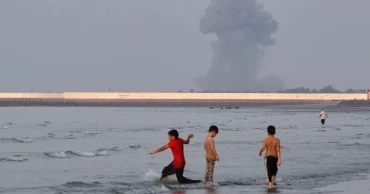
The United States carried out fresh airstrikes on Iran early Tuesday, hours after President Donald Trump announced that Washington was "reinstating" a blockade on Iran in the Strait of Hormuz and suggested that other countries' ships could be charged for safe passage through the strategic waterway.
Iran responded by launching attacks on Bahrain and Jordan and targeting two United Arab Emirates-linked oil tankers passing through the Strait of Hormuz. The attacks killed one sailor and injured eight others, while the UAE warned it could retaliate against Tehran, raising fears of a wider regional conflict.
The latest escalation comes as the US and Iran struggle for control of the Strait of Hormuz, a key global shipping route that has carried about one-fifth of the world's traded crude oil and natural gas during peacetime.
Oil prices reacted quickly, with Brent crude rising above $84 a barrel in early Tuesday trading, its highest level in a month. Although still below the nearly $120 seen during the height of the conflict, the increase could push up energy costs worldwide.
The renewed fighting has also further weakened a temporary ceasefire between Washington and Tehran. The two sides were nearly halfway through a 60-day period meant to produce a permanent agreement addressing Iran's disputed nuclear programme and other issues.
According to the US military's Central Command, the strikes targeted Iranian coastal defence systems, missile and drone sites, and maritime facilities around Abu Musa, Bandar Abbas, Bushehr, Chahbahar, Jask and Konarak.
Iran confirmed that the areas had come under attack but did not immediately report casualties or damage.
The US military said the operation was intended to reduce Iran's ability to attack civilians and commercial vessels in the Strait of Hormuz.
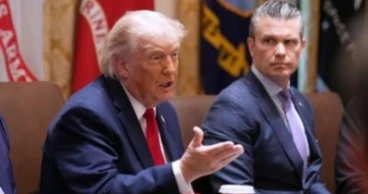
Speaking at the White House shortly after the strikes, Trump described the operation as "another major attack."
"We're hitting them very hard. And it'll continue, and we'll see what happens," he told reporters. He also claimed the US was taking control of the strait and restoring the blockade.
Trump also expanded on his earlier proposal to charge ships for using the Strait of Hormuz, marking a major shift from longstanding US policy supporting free navigation through international waterways without tolls.
Such a move would challenge long-established international maritime practices and could further disrupt global trade and increase tensions in the region.
Meanwhile, the UAE's Defence Ministry said Iran fired two cruise missiles at the oil tankers Mombasa and Al Bahiyah in the Strait of Hormuz. Both vessels caught fire, but the blazes were later brought under control.
The UAE said one Indian sailor was killed while six Indian and two Ukrainian crew members were injured. Abu Dhabi warned that it reserved the right to respond.
Iran's Revolutionary Guard claimed responsibility for the attack, saying the ships had ignored repeated warnings and entered what it described as a minefield.
Bahrain also reported fresh Iranian missile attacks early Tuesday, sounding air raid sirens three times and urging residents to seek shelter.
Jordan's military said it intercepted four Iranian missiles. The country hosts US military forces and has been targeted by Iran several times in recent days.
Earlier Monday, Trump said the interim agreement reached with Iran last month had been designed to test Tehran's intentions, accusing the Iranian government of failing to honour its commitments.
Iran, however, maintains that it has the right to regulate shipping through the Strait of Hormuz and potentially impose fees under the interim agreement, a claim rejected by Washington.
The US military and the International Maritime Organization have tried to establish an alternative shipping route along Oman's coast outside Iranian control, but Iran has also attacked vessels using that route, prompting repeated US military responses and further exchanges of fire.
On social media, Trump said the US was restoring the Iranian blockade while insisting that other countries would continue to have open access to the strait. He also proposed that the US recover security costs by collecting 20% of cargo values from commercial shipping, although no details were provided. Secretary of State Marco Rubio, who is visiting the region, said there would be no fees for ships using the waterway.
The US military said its blockade of Iranian ports would resume from midnight Wednesday local time in Dubai.
Separately, Israeli and Lebanese delegations were scheduled to meet in Rome on Tuesday for US-mediated talks aimed at advancing a framework agreement announced last month. The deal calls for the withdrawal of Israeli forces from southern Lebanon in exchange for the disarmament of the Iran-backed Hezbollah group, although implementation has stalled.
A ceasefire remains in place in Lebanon, but uncertainty persists over whether it can survive if the conflict between the United States and Iran expands into a full-scale war.
3 months ago
US strike on suspected drug-smuggling boat kills 3 in Pacific, death toll rises to 205
The U.S. military said it carried out another strike on a boat suspected of drug trafficking in the eastern Pacific Ocean on Saturday, killing three men in what was the fourth such operation this week. The latest attack has pushed the total death toll from the campaign to 205.
The U.S. Southern Command said the vessel was involved in drug-smuggling activities and was operated by a group designated as a terrorist organization. However, it did not provide any evidence to support the claim.
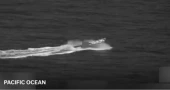
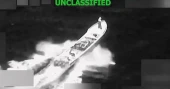
The strike is part of an ongoing military campaign targeting suspected drug-trafficking boats in the Caribbean Sea and eastern Pacific that has been underway for several months. Video released by the military showed a small boat at sea before it was struck and burst into flames.
According to U.S. officials, the latest operation followed similar strikes announced earlier this week on Tuesday, Wednesday and Friday. The campaign began in early September and has now resulted in 205 deaths.
The administration of U.S. President Donald Trump has described Latin American drug cartels as being in armed conflict with the United States, blaming them for the flow of illegal drugs into American communities.
The Southern Command said the latest strike was ordered by Francis L. Donovan, the top U.S. military commander overseeing operations in Latin America.
4 months ago
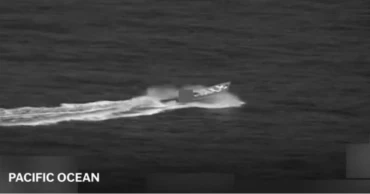
US strike on suspected drug boat in eastern Pacific kills 1, leaves 2 survivors
The US military carried out another strike on a boat suspected of carrying illegal drugs in the eastern Pacific Ocean on Tuesday, killing one person and leaving two others alive, officials said.
U.S. Southern Command shared video of the operation showing a speedboat travelling across the water before being hit and bursting into flames. The command said it immediately alerted the US Coast Guard to launch a search and rescue operation for the survivors.
The latest attack is part of an ongoing US military campaign against suspected drug trafficking vessels in Latin American waters, including both the eastern Pacific and the Caribbean Sea, which began in September. Officials say the campaign has killed at least 194 people so far.
However, the military has not publicly presented evidence that the targeted boats were actually carrying drugs.
The Pentagon’s inspector general has recently launched a review to check whether proper targeting procedures were followed during such strikes. The review will look at operational decision-making but will not examine the legality of the attacks, which have drawn criticism from some lawmakers and legal experts.
The Trump administration maintains that the US is effectively in a conflict with Latin American drug cartels, which it blames for rising drug overdose deaths in the United States.
4 months ago
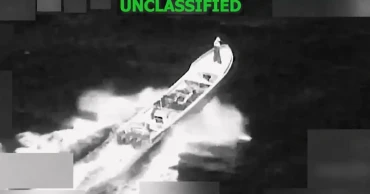
US strike on suspected drug boat kills 3 in Caribbean
The US military said it carried out another strike on a boat suspected of transporting drugs in the Caribbean Sea, killing three people on Sunday.
The attack is part of an ongoing campaign by the administration of Donald Trump targeting alleged drug-smuggling vessels in Latin American waters since early September. The operations have so far killed at least 181 people, with similar strikes also reported in the eastern Pacific Ocean. ([euronews][1])
Despite the ongoing conflict with Iran, the pace of these strikes has increased again in recent days, indicating that Washington’s efforts against what it calls “narcoterrorism” in the region are continuing. However, the US military has not provided evidence confirming that the targeted boats were carrying drugs.
The campaign began as the United States expanded its military presence in the region. It also followed a January operation that led to the capture of former Venezuelan president Nicolás Maduro, who was taken to New York to face drug trafficking charges and has pleaded not guilty.
In Sunday’s strike, US Southern Command said it targeted suspected traffickers moving along known smuggling routes and shared a video showing the boat being destroyed in a large explosion.
President Trump has described the situation as an “armed conflict” with drug cartels in Latin America and defended the strikes as necessary to curb drug flows and overdose deaths in the United States.
Critics, however, have raised concerns about the legality of the operations and questioned the lack of clear evidence supporting the claims that those targeted were involved in drug trafficking.
6 months ago
Iran’s supreme leader says any US strike would ignite regional war
Iran’s Supreme Leader Ayatollah Ali Khamenei on Sunday warned that any military attack by the United States would spark a “regional war,” sharply escalating rhetoric amid rising tensions following Washington’s threats over Tehran’s violent crackdown on nationwide protests.
The warning, delivered as US aircraft carrier USS Abraham Lincoln and accompanying warships operate in the Arabian Sea, marked Khamenei’s most direct threat so far. The vessels were deployed by President Donald Trump after Iran’s security forces moved forcefully to suppress weeks of unrest across the country.
It remains uncertain whether Washington will resort to military action. Trump has repeatedly said Iran is interested in negotiations, while also raising concerns about Tehran’s nuclear programme as a key unresolved issue.
Addressing a crowd at his Tehran compound during events marking the anniversary of Iran’s 1979 Islamic Revolution, the 86-year-old leader accused the United States of seeking to dominate Iran’s natural resources.
“The Americans must know that if they start a war this time, it will be a regional war,” Khamenei said. He added that Iran did not seek conflict, but warned that any attack or harassment would be met with a severe response from the Iranian nation.
Trump, asked about the warning, told reporters that US naval forces were positioned nearby and expressed hope for a negotiated settlement. He said if no deal was reached, it would become clear whether Khamenei’s threat was credible.
Khamenei also hardened his stance on the protests, describing them as “sedition” akin to a coup attempt. While he had earlier acknowledged that some protesters were driven by economic grievances, he now accused demonstrators of targeting state institutions, security forces, banks and religious sites in an effort to destabilise the country.
Human Rights Activists New Agency, a US-based group that tracks developments inside Iran, said more than 49,500 people have been detained since the protests began in late December and estimated at least 6,713 deaths, mostly among demonstrators. The Associated Press has not been able to independently verify the figures, citing Iran’s restrictions on internet access.
Iranian authorities have put the death toll far lower, reporting 3,117 fatalities as of Jan 21, including civilians and security personnel, while labelling others “terrorists.” Past unrest has seen official figures widely questioned.
Meanwhile, Iran had planned live-fire military drills in the Strait of Hormuz, the strategic waterway through which about one-fifth of the world’s oil supply passes. The US military warned Tehran against threatening American forces or disrupting commercial shipping during the exercises.
In a separate development, Iran’s parliament speaker Mohammad Bagher Qalibaf said Tehran now considers all European Union militaries to be terrorist organisations. The move came after the EU designated Iran’s Islamic Revolutionary Guard Corps as a terror group over its role in the crackdown.
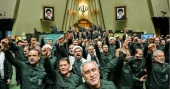
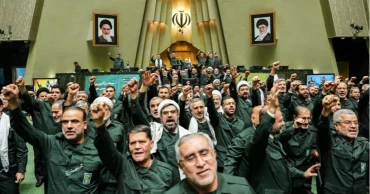
Qalibaf, a former Guard commander, made the announcement as lawmakers wore Guard uniforms in solidarity. The designation is largely symbolic, mirroring a 2019 Iranian law used after the United States labelled the Guard a terrorist organisation.
Lawmakers later chanted anti-US and anti-Israel slogans in parliament.
Trump has outlined two red lines that could trigger US military action: the killing of peaceful protesters or mass executions of detainees. He has also renewed focus on Iran’s nuclear programme, which the US struck during a brief war with Iran last June.
Speaking over the weekend, Trump declined to say whether he had decided on a course of action, but said Iran was “seriously talking” to the United States about reaching a deal to prevent it from acquiring nuclear weapons.
8 months ago
Worry spreads in Middle East over potential US strike on Iran
A month after nationwide protests erupted in Iran, fear and uncertainty are spreading across the Middle East over a possible U.S. military strike, as regional diplomacy intensifies to avert a crisis.
Iranian officials engaged with neighboring countries on Wednesday following signs that Washington may consider military action. Saudi Arabia and the United Arab Emirates have both ruled out allowing their airspace to be used for any such attack. Meanwhile, the U.S. has deployed the USS Abraham Lincoln and several guided missile destroyers to the region, capable of launching strikes from the sea.
U.S. President Donald Trump has not yet decided on using force, although he has warned against the killing of peaceful demonstrators and mass executions of detainees. Activists say at least 6,221 people have died in Iran’s crackdown on protests, with thousands more injured or arrested.
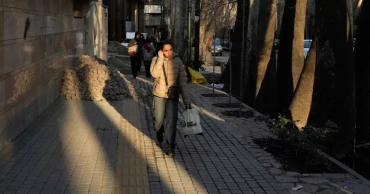
Amid internet restrictions, Iranians remain anxious, watching videos of shootings and fearing further escalation while the country’s economy deteriorates. “I feel my generation failed to teach the younger ones,” said Mohammad Heidari, a Tehran high school teacher.
Diplomatic contacts intensified this week. Egypt’s Foreign Minister Badr Abdelatty spoke with Iranian Foreign Minister Abbas Araghchi and U.S. Middle East envoy Steve Witkoff to “work toward achieving calm.” Saudi Crown Prince Mohammed bin Salman also spoke with Iranian President Masoud Pezeshkian, reiterating that Saudi airspace or territory would not be used for attacks against Iran, a position mirrored by the UAE.
Both countries host U.S. military assets but have faced attacks in recent years, including the 2019 strike that halved Saudi oil production and Houthi attacks on the UAE in 2022. Iran also targeted Qatar’s Al Udeid Air Base last year after U.S. airstrikes on Iranian nuclear sites.
Araghchi stressed that diplomacy must replace threats. “Negotiations must be conducted on an equal footing, based on mutual respect, and for mutual benefit,” he said.
Human Rights Activists News Agency reported at least 6,221 deaths, including protesters, children, and civilians, with over 42,300 arrests since the unrest began on Dec. 28 following a sharp fall in the Iranian rial. Iran’s official figures remain far lower, citing 3,117 deaths and labeling many victims as “terrorists.”
The current unrest, the deadliest in decades, recalls the turmoil of the 1979 Islamic Revolution.
8 months ago
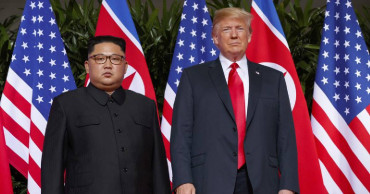
US strike on Iran could have consequences in North Korea
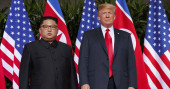
The U.S. strike that killed Iran's top military commander may have had an indirect casualty: a diplomatic solution to denuclearizing North Korea.
6 years ago