Middle East tension
Iran brushes off US economic threats, other regional developments
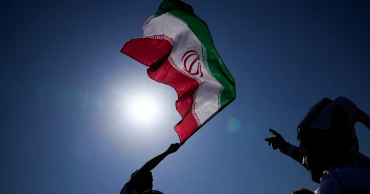
Iran on Thursday dismissed threats by U.S. President Donald Trump of economic pain and isolation for the country, while six European nations condemned Israel over a settlement project.
Doctors Without Borders criticized the decision by Israel's military not to investigate two fatal attacks on the medical humanitarian organization's staff, and in Gaza City, a mass funeral was held for 50 people killed in Israeli airstrikes nearly three years ago but whose remains were just recovered.
Here’s a look at the latest developments in the Iran war and the wider Middle East on Thursday. Full coverage can be found here.
Iran denounces Trump's economic threat
Iranian Foreign Minister Abbas Araghchi has rejected the economic threats made against his country, saying that such “failed policies” will stir more hostility among Iranians and “bring more failures.”
Araghchi's comments came a few hours after Trump threatened “crushing economic measures” against Iran. The U.S. president promised “Economic Warfare and Isolation on an unprecedented scale,” but provided few details.
In a social media post, Araghchi maintained that the threats aim to divert the attention of the U.S. public from domestic financial problems, saying that U.S. “economic terrorism threatens the global economy and the national sovereignty of countries around the world.”
U.S. Treasury Secretary Scott Bessent said Thursday that Iran will face the “greatest coordinated economic isolation in the history of the world."
In a CNBC interview, Bessent threatened secondary sanctions on nations and companies that conduct business with Iran, saying it's time for U.S. allies to make a decision on where they stand.
China's government and India are major buyers of Iranian oil, though Bessent didn't call them out by name.
Doctors Without Borders condemns Israel's military
Doctors Without Borders said that the decision by Israel's military not to open a criminal investigation into two strikes that killed four people shows the country won't take responsibility for attacking civilians.
The international aid group now wants an impartial investigation into the deaths, but didn't specify who should lead the effort.
Doctors Without Borders asked Israel's military to investigate an attack on a Gaza City convoy in November 2023 and a strike on the organization's shelter in Khan Younis in February 2024. Israel’s announcement on Wednesday said that it wouldn't launch criminal investigations into the two cases, in which troops killed the organization's employees.
The decision by Israel's military shows “there is no prospect of accountability within the Israeli legal system for the killing of our staff, just as there has been no accountability for Israel’s ongoing genocide against Palestinians,” Doctors Without Borders said in a statement that cited 15 staff and 1,700 healthcare workers killed in Gaza since October 2023.
Israel denies accusations of genocide and war crimes and says it's targeting Hamas after the militant group's attack on southern Israel that killed 1,200 people and took 251 hostage on Oct. 7, 2023. Israel blames civilian deaths on Hamas, because it operates in populated areas in the tiny, overcrowded Gaza Strip.
UK and others rebuke planned West Bank settlement project
Six European countries along with Canada condemned the latest development in a contentious Israeli settlement project near Jerusalem that would effectively cut the occupied West Bank in two.
Israel’s Ministry of Construction and Housing issued a tender for constructing several compounds with more than 1,200 homes in total in an open tract of land east of Jerusalem. It’s the latest step in a project under consideration for more than two decades, which critics say would prevent the establishment of a contiguous Palestinian state in the territory.
The joint statement from the leaders of the U.K., France, Germany, Italy, the Netherlands, Norway and Canada said international law is clear the settlement is illegal and noted “unprecedented levels of violence by settlers against civilians.”
“We urge the government of Israel to retract these plans immediately and end its expansion of settlements in the West Bank. Not only will they take us further from peace, but they further undermine Israel's international standing,” the countries wrote.
Egypt and Jordan also condemned Israel’s move.
Israeli Foreign Minister Gideon Saar responded on Thursday by defending “the historic right of the Jewish people to reestablish their national home in the Land of Israel — including in the area in question.” Saar criticized the U.K. government for “blaming only Israel while ignoring Palestinian extremism.”
Gaza funeral for 50 killed in opening strikes of war
A mass funeral Thursday in Gaza City remembered 50 Palestinians killed in Israeli strikes in the opening months of the Israel-Hamas war, but whose remains were only recently recovered from under rubble.
Dozens of mourners carried the remains, draped in Palestinian flags, through debris-strewn streets before lowering them into graves. Some held portraits and posters with photos of the deceased.
“We were able to recover them after three years of war, after three years of anguish, pain and torture. We were able to recover them, and dignify them in their final resting place. We were able to pray over them and bury them,” said Lina Karam, who lost her father and other members of her family.
The 50 bodies were from three families who were killed in airstrikes in November and December 2023.
The nearly three-year war has killed more than 73,400 Palestinians, according to Gaza’s Health Ministry. The ministry, which was part of the Hamas-run government, maintains detailed records viewed as generally reliable by U.N. agencies and international organizations. It doesn’t distinguish between civilians and militants, but says women and children make up around half of the toll.
US sanctions network supporting Hezbollah
The U.S. announced new sanctions Thursday against a network of people who allegedly funneled cash into Lebanon for the Iran-backed Lebanese militant group Hezbollah.
The network run by Turkish businessman Yunus Alper Yilmaz uses couriers traveling on commercial flights between Lebanon, Turkey, the UAE and Iran “to move up to hundreds of millions of dollars between jurisdictions, providing an avenue outside the formal financial system” to move funds to Hezbollah, the U.S. Department of Treasury said in a statement.
The Treasury also redesignated Hezbollah — which was already sanctioned by the U.S. — as an Iranian proxy acting on behalf of Iran’s Islamic Revolutionary Guard Corps Quds Force rather than a stand-alone operation.
The redesignation aims to underscore that Hezbollah “operates with little to no regard for Lebanese sovereignty, the Lebanese people or the Lebanese state,” the Treasury statement said.
Turkey denies delegation had visited air base in Syria
Turkey has denied that a Turkish military delegation had visited an air base in northern Syria that was hit by Israeli airstrikes, and vowed to continue supporting Syria in its efforts to rebuild its military.
The Israeli strikes targeted the Abu Duhur base early on Tuesday, causing damage but no casualties. Israeli Prime Minister Benjamin Netanyahu’s office said that Israel had attacked the base because Syria was “on the verge of breaching” an agreed-upon “status quo in security matters” by allowing Turkish troops to deploy there.
Syrian officials have said that a Turkish delegation visited the base before the Israeli strike to review rehabilitation work underway there.
Syria's top diplomat discusses Middle East in Pakistan
Syrian Foreign Minister Asaad al-Shibani arrived in Islamabad for talks expected to focus on regional issues, Pakistan's Ministry of Foreign Affairs said.
The visit comes days after Israeli airstrikes targeted an air base in northern Syria, causing damage but no casualties.
Pakistan's officials say the country's political and military leadership remains in contact with both Iran and the United States over efforts to de-escalate tensions and push for the resumption of talks, after a 60-day deadline under a June memorandum of understanding expired. The agreement was brokered by Pakistan with help from regional countries.
Bodies of Pakistani sailors returned after Houthi attack
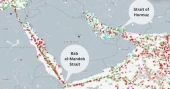
The bodies of two Pakistanis killed in last week’s Houthi attack on a Tanzanian-flagged commercial vessel in the Bab el-Mandeb Strait have been repatriated to Pakistan.
Six Pakistani sailors who were wounded in the attack have also safely returned to the country, Foreign Minister Ishaq Dar said in a post on X.
2 months ago
A timeline of the Iran conflict and negotiations
The United States and Iran have again traded strikes after a week in which U.S. President Donald Trump mused that fragile negotiations between them might be “over.”
The countries are now nearly halfway through the 60-day period that began with their signing of an interim deal aimed at permanently ending the war.
At stake are the lives of Iranians and others throughout the region, including Israel and Lebanon, along with foreign residents of Gulf nations, U.S. military personnel stationed in multiple countries and thousands of mariners on ships still hoping to exit the Strait of Hormuz.
The strait between Iran and Oman, considered an international waterway before the war, has become one of Tehran’s strongest pressure points in talks. Iran insists it alone now controls the strait.
Here’s a brief timeline of the war and efforts to end it:
Feb. 28
Israel and the U.S. attack Iran, killing Supreme Leader Ayatollah Ali Khamenei and other top officials, sparking the war. Iran quickly responds with strikes against Israel and across the Gulf region and asserts control over the Strait of Hormuz, a key waterway for global oil and natural gas supplies from the Gulf.
March 2
The Iranian-backed Hezbollah militant group in Lebanon enters the war by firing rockets at Israel.
Israel retaliates, leading to an invasion that will occupy large swaths of southern Lebanon.
March 8
Iran names one of Khamenei’s sons, Mojtaba, as the new supreme leader. He still has not been seen in public and is believed to be in hiding after reportedly being hurt in the war’s opening strikes.
3 months ago
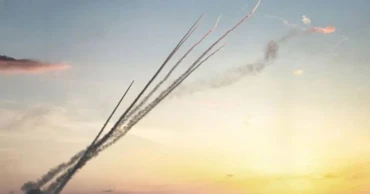
US-Iran strikes rattle Middle East
Since the U.S. and Israel started the war with attacks on Iran on Feb. 28, the conflict has shaken the global economy, driven up energy prices around the world, and made many basics, including food, more expensive. Brent crude oil, the international standard, was at more than $91 a barrel on Wednesday, up more than 25% since the start of the war.
In the latest strikes, U.S. fighter jets targeted “air defense, ground control stations, and surveillance radar sites,” the military’s Central Command said. Iran acknowledged strikes around Bandar Abbas and Qeshm Island, but gave no details on the damage.
“The operation was a proportional response to recent attacks on U.S. forces and international commercial ships transiting regional waters,” Central Command said.
Iran’s top diplomat vowed that there would be a response, and Tehran later claimed attacks in Kuwait, Bahrain and Jordan.
Jordan said it shot down five incoming missiles, which Iran said targeted the Muwaffaq Salti Air Base. The base has hosted American F-35 fighter jets and other aircraft.
Jordan’s state-run Petra news agency carried a military statement saying there were no injuries and that explosives experts examined the debris from the interceptions.
Bahrain and Kuwait said they intercepted incoming fire, without elaborating.
Iranian Foreign Minister Abbas Araghchi condemned the American attacks as a violation of Iranian sovereignty in calls with his counterparts from Turkey and Saudi Arabia “and emphasized the inherent right of self-defense, including reciprocal action,” according to a post on his office’s Telegram channel.
The exchanges of fire came a day after a U.S. Army attack helicopter crashed near the Strait of Hormuz after colliding with an Iranian drone, according to a U.S. official, who spoke on condition of anonymity to discuss an ongoing investigation. It wasn’t clear whether the collision was intentional.
A drone boat rescued both of the helicopter’s aviators, and Trump said they were uninjured.
4 months ago
Israel retaliates against Iran amid fresh missile fire
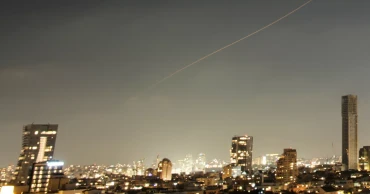
Israel said Monday that Iran had launched missiles targeting it, hours after Israel launched airstrikes targeting central and western Iran in response to missile fire from Tehran. The exchange of strikes threatened to drag the wider Middle East back into a regional war.
Sirens sounded in central Israel, and the government urged the public to seek shelter. Explosions could be heard in central Israel as Israeli air defenses sought to intercept the incoming Iranian fire. Iran did not immediately acknowledge the attack.
Monday marked the 100th day of the Iran war, launched Feb. 28 when Israel and the United States killed Supreme Leader Ayatollah Ali Khamenei and other senior Iranian leaders. The war raged until reaching a nominal ceasefire on April 8, but a permanent end to the hostilities have been challenged by Iran's chokehold on the Strait of Hormuz, through which a fifth of all oil and natural gas traded once passed in peacetime, as well as fighting between Israel and the Lebanese Shiite militia Hezbollah.
With global energy supplies threatened, Iran still holding a vast stockpile of highly enriched uranium and even Yemen's Houthi rebels apparently getting involved in the fighting Monday, the risks of the war fully erupting again appears to be rising.
Israel strikes Iran
Iranian state television reported the sound of explosions being heard in Isfahan, Karaj, Tabriz and Tehran, without immediately elaborating. A witness in Tehran described hearing at least one large blast somewhere to the west of the country’s capital city. Iran closed the airspace around Tehran’s Imam Khomeini International Airport, the country’s main airfield, after the Israeli attack.
Sirens sounded across Israel on Monday after its military said a missile launched from Yemen targeted the country, without elaborating. Israel’s rescue services said there were no reports of casualties or impacts from the launch from Yemen.
Yemen is home to the Iranian-backed Houthi rebels. The Houthis have fired missiles at Israel during the Israel-Hamas war and later, but haven’t been fully involved in the Iran war. The Houthis did not immediately claim the attack, though it can take them hours or even days to acknowledge their assaults.
In Iran, officials offered no details on what had been struck, nor any damage information. Iran’s paramilitary Revolutionary Guard said that Israel used air-launched ballistic missiles in its attack Monday morning, without elaborating.
The Israeli military at dawn in Iran issued a short statement as the strikes started: “A short while ago, the Israeli Air Force struck military targets belonging to the Iranian terror regime in western and central Iran.” It did not elaborate.
In Saudi Arabia, missile alert sirens sounded Monday morning in an area home to an air base that hosts U.S. forces. Saudi state media reported the alert around its Al Kharj governorate, home to Prince Sultan Air Base. The alert came after Israel’s strikes on Iran. Saudi Arabia shortly after said the missile danger in the area had passed, without elaborating.
Trump says ‘I call the shots,’ not Israel
The White House did not respond to messages about the strikes and whether they were done in coordination with the U.S.
A senior U.S. official on Sunday said U.S. President Donald Trump had called Israeli Prime Minister Benjamin Netanyahu to urge him not to retaliate immediately for the Iranian missile attack. The official, who spoke on condition of anonymity to describe a private phone call, said that Trump believed he had convinced Netanyahu to wait.
Trump “got Bibi to hold off for the time being,” the official said. The official would not offer any other details of the call, and there was no immediate comment from Netanyahu’s office.
For days, negotiations between Iran and the United States over the fragile ceasefire in the war had been stalled by the fighting between Israel and the Lebanese Shiite militia Hezbollah. Israel now occupies southern Lebanon and had moved into areas of the country it hadn't held in a quarter century — leading to fears about them further widening their campaign.
On Sunday, Israel launched airstrikes in Beirut's southern suburbs. Iran retaliated with its own strike on Israel, which led to Monday morning's attack by Israel on Iran.
Trump earlier told a Fox News Channel reporter that he wanted the Iranians to stop firing missiles and return to the negotiating table. He also said that Israel’s strikes in Lebanon earlier Sunday were not coordinated with the U.S. and “I’m not happy about it.”
Speaking to The Financial Times before the Israeli strikes on Iran, Trump insisted he dictated terms to Netanyahu on how the war should be prosecuted.
“He won’t have any choice,” Trump told the newspaper in a telephone interview. “I call the shots. I call all the shots. He (Netanyahu) doesn’t call the shots.”
4 months ago
US, Iran near agreement to end ongoing war
The United States and Iran appeared to be moving closer Wednesday to an initial agreement to end the war, as U.S. President Trump sought to pressure Tehran with threats of a new wave of bombing if a deal is not reached.
Trump posted on social media that the two-month war could soon end and that oil and natural gas shipments disrupted by the conflict could restart. But he said that depends on Iran accepting a reported agreement that the president did not detail.
“If they don’t agree, the bombing starts,” Trump wrote.
Trump made his latest comments after he suspended a short-lived U.S. effort to force open a safe passage for commercial ships through the Strait of Hormuz, a vital waterway through which major oil and gas supplies, fertilizer and other petroleum products passed before the war.
Iran’s effective closure of the strait has sent fuel prices skyrocketing, rattled the global economy and put enormous economic pressure on countries, including major powers such as China.
Elsewhere, China’s foreign minister called for a comprehensive ceasefire Wednesday after meeting in Beijing with Iran’s top envoy. Wang Yi said his country was “deeply distressed” by the conflict, which began Feb. 28 when the U.S. and Israel launched strikes against Iran.
China’s close economic and political ties to Tehran give it a unique position of influence. The Trump administration is pressing China to use that relationship to urge the Islamic Republic to open the strait.
Report says Washington closer to a deal with Tehran
The White House believes it is near an agreement with Iran on a one-page memorandum to end the war, according to reporting by Axios. There is not an agreement yet, but the provisions include a moratorium on Iranian uranium enrichment, a lifting of U.S. sanctions and the distribution of frozen Iranian funds and opening the strait for ships.
The White House did not immediately respond to questions about the possible agreement.
Trump said in his social media post that it was “perhaps a big assumption” that Iran would agree to the terms being offered by the United States.
“If they don’t agree, the bombing starts, and it will be, sadly, at a much higher level and intensity than it was before,” Trump said.
A shaky ceasefire between the U.S. and Tehran has largely held since it began April 8. Pakistan hosted in-person talks last month between Iran and a U.S. delegation led by Vice President JD Vance, but the talks failed to result in a deal.
5 months ago
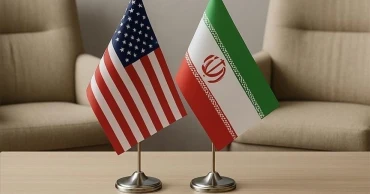
Pakistan, Iran yet to confirm second round of US-Iran talks
Six hours have passed since U.S. President Donald Trump said negotiators would head to Pakistan on Monday for more talks with Iran, but neither Iran nor host Pakistan have confirmed it.
Pakistan has kept up the diplomacy today, with its prime minister holding a 45-minute call with Iran’s president and Pakistan’s foreign minister speaking with his Iranian counterpart.
But while authorities have begun tightening security in Islamabad, the only player that has openly committed to another round of talks is the Trump administration.
6 months ago
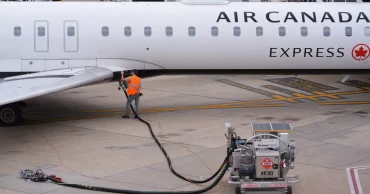
What jet fuel shortages could mean for your next trip
A looming jet fuel shortage in Europe and Asia sparked by the Iran war and the effective closure of the Strait of Hormuz could further upend world travel within weeks if oil doesn’t start flowing again soon — meaning higher airfares and flight cancellations as the summer travel season approaches.
In an exclusive Associated Press interview Thursday, International Energy Agency Director Fatih Birol said Europe has “maybe six weeks” of remaining jet fuel supplies and said the global economy faces its “largest energy crisis.”
In general, some European countries hold several months’ worth of jet fuel inventory at a time, according to an IEA report released this week.
Jet fuel — a refined kerosene-based oil product — is airlines’ biggest cost, making up about 30% of overall expenses, according to the International Air Transport Association. And jet fuel prices have roughly doubled since the war began. Shortages could start next.
“Every passing day that the Strait of Hormuz remains shut, Europe is edging closer to supply shortages,” said Amaar Khan, head of European jet fuel pricing at Argus Media. “The strait accounts for around 40% of Europe’s jet fuel imports, but no jet fuel has passed the strait since the war broke out.”
Airline officials have largely reacted with caution, acknowledging potential fuel issues but working to reassure customers. Still, some carriers have already passed costs on to consumers by increasing fees for baggage and other add-ons, embedding costs into ticket prices, or raising fuel surcharges.
A handful of airlines already are cutting flights. Experts say other parts of air travel — such as scheduling flexibility and routes — would likely be impacted.
Here’s a look at how jet fuel supplies work and how consumers might see effects.
How does jet fuel get to the plane?
Jet fuel is made from crude oil at refineries, which also create gasoline and diesel.
Airlines generally buy jet fuel from refineries or fuel companies, similar to drivers buying gasoline from stations, but on a much larger scale. Jet fuel travels on ships and through pipelines and is stored by airlines at airports.
Purchasing is handled by airlines. If fuel supplies are running out in a region, that doesn’t necessarily mean there will be no flights. Some airlines might have more stored than others.
But remaining flights are likely to be expensive, reflecting fuel costs.
Larger airlines have advantages in regions with shortages. They have the financial means to deal with high prices, said Jacques Rousseau, managing director at financial firm Clearview Energy Partners.
In Europe, a number of countries are now relying on less than 20 days of coverage in their fuel supplies, according to this week’s IEA report. Supplies haven’t dropped below 29 days since 2020, the report said.
If that falls under 23 days, physical shortages may emerge at some airports, resulting in flight cancellations and lower demand, the report warned.
Which regions could feel pain?
Asia-Pacific countries are the most reliant on oil and jet fuel from the Middle East, followed by Europe, Rousseau said.
Most of Europe’s jet fuel is produced by European refiners, but about 20-25% of its supply is missing because of the war, Rousseau said.
To fill some gaps, the U.S. has increased its exports of jet fuel to Europe considerably, sending about 150,000 barrels per day in April, or about six times the normal level, Rousseau said.
Availability of jet fuel is less of an issue in the U.S., a major oil producer, he added.
“I tell my kids ... we’re not so much going to run out of supply,” Rousseau said. “It’s just going to cost more here, whereas in different parts of the world you could actually get to a point where there’s just no fuel.”
How much is the world supply of jet fuel lagging?
The world is losing 10 million to 15 million barrels of oil a day due to the closure of the Strait of Hormuz, said Pavel Molchanov, senior investment strategist at investment firm Raymond James & Associates.
“There are exactly the same refineries in exactly the same places in Asia and Europe, but if there is not enough oil for those refineries to operate, it’s going to lead to physical supply disruption,” he said.
Even though the IEA has released 400 million barrels of oil from members’ emergency reserves, that won’t help in the short term, he added.
“It could take until the end of the year to get all of those barrels onto the market,” he said.
How will my travel be affected?
Christopher Anderson, a professor of operations, technology and information management at Cornell University, said travelers should prepare for more than just higher airfares.
“This is no longer just a fuel-price story. For airlines, it is now a network-planning story,” he said. “Higher fuel costs matter, but so do longer routings, reduced scheduling flexibility and greater uncertainty about what demand will look like even a few weeks out.”
Travelers might see “a market with later booking patterns, more schedule volatility and fewer low-fare options if this disruption lasts into the core summer season,” he said.
What are airlines doing?
Dutch airline KLM and U.K. budget carrier easyJet told AP they weren’t experiencing current fuel shortages, without commenting further on the IEA’s warning.
Still, both airlines are among those that have seen higher costs eat into their budgets.
On Thursday, KLM said it would cut 160 flights next month — about 1% of its total European routes. The airline cited “rising kerosene costs” and said a limited number of flights are “no longer financially viable to operate.”
In a Thursday update, EasyJet said it expects to see a pretax loss of 540 million to 560 million pounds (about $731 million to $758 million) for the first half of the 2026 fiscal year. Still, CEO Kenton Jarvis said demand remains strong overall — noting that Easter travel was easyJet’s busiest ever for that holiday period.
Lufthansa said Thursday that labor disputes and high fuel prices are forcing it to immediately shut down feeder airline CityLine, earlier than planned, and take its 27 older, less fuel-efficient planes out of service. The decision accelerates a shutdown that had been expected for next year.
U.S. carrier Delta Air Lines — which frequently flies to European destinations — said on Thursday that it was “aware of the potential jet fuel supply issue” on the continent and monitoring the situation. Delta, which bought a refinery in Philadelphia in 2012 to manage its largest expense, said it doesn’t expect any “near-term impact to our operations.”
How are prices affected?
Other airlines have sounded the alarm about rising fuel prices, with some already passing along new costs to travelers, often embedded into ticket prices and add-on fees.
U.S. carriers Delta, United, American Airlines, Southwest Airlines and JetBlue have all increased checked baggage fees, for example, in recent weeks.
United CEO Scott Kirby said in a recent memo to staff that if fuel prices stay elevated, it could add $11 billion in annual costs. “For perspective,” Kirby wrote, “in United’s best year ever, we made less than $5B.”
Meanwhile, Hong Kong’s Cathay Pacific recently bumped fuel surcharges by roughly 34% across all routes, while Air India added up to $280 in fees to some flights earlier this month. Emirates, Lufthansa and KLM have also adjusted fees or fares to keep pace with the price volatility.
6 months ago
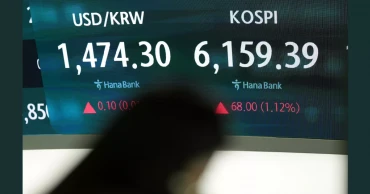
Stocks climb on rising hopes of U.S.-Iran negotiations
Shares around the world rose as investors grew optimistic of a ceasefire extension in the Iran war.
In Europe, Britain’s FTSE 100, France’s CAC 40 and Germany’s DAX were all up by around 0.5%.
In Asia, Tokyo’s Nikkei 225 closed 2.4% while Hong Kong’s Hang Seng rose 1.7% to 26,394.26. The Shanghai Composite index ended 0.7% higher.
Pakistan’s army chief is set to meet with Iranian officials in Tehran on Thursday in a bid to extend the ceasefire which paused almost seven weeks of war between Israel, the U.S. and Iran that have killed thousands of people and upended global markets by disrupting the flow of oil.
Uncertainty remains whether the frantic diplomacy can lead to a deal.
The meeting comes as President Donald Trump announced the leaders of Israel and Lebanon will speak later on Thursday about halting the fighting between them.
If it takes place, the conversation would be the first time the leaders of the two countries have spoken directly in more than 30 years.
Both Israeli and Lebanese governments refused to confirm a conversation.
6 months ago
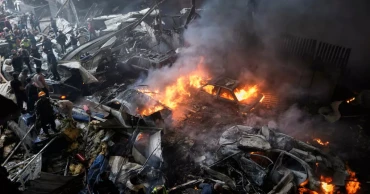
Israel strikes Lebanon; death toll rises to 254
Israeli airstrikes across Lebanon, including the capital Beirut, have killed at least 254 people and injured more than 1,165, according to Lebanese civil defence authorities.
The casualties were reported from multiple places with Beirut recording 92 deaths and 742 injuries, followed by heavy losses in the southern suburbs, Nabatieh, Tyre, and Sidon, reports Al Jazeera.
Israeli Prime Minister Benjamin Netanyahu said Lebanon would not be part of any ceasefire arrangement involving Iran, reaffirming continued strikes against Hezbollah targets.
“We are continuing to hit Hezbollah,” Netanyahu said, adding that Israeli forces targeted areas previously considered safe by the group.
US President Donald Trump also said Lebanon is not included in the reported two-week ceasefire deal, describing the situation as a “separate skirmish” linked to Hezbollah.
Meanwhile, Iran’s Foreign Minister Abbas Araghchi urged the United States to choose between ceasefire and continued conflict.
“The world is witnessing the killings in Lebanon… the ball is now in America’s court,” he said.
Qatar condemned the Israeli attacks, calling them a “dangerous escalation” and a violation of international law and UN Security Council resolutions, and urged the international community to act to stop the violence.
The latest developments have raised concerns over a wider regional conflict as diplomatic efforts remain uncertain.
6 months ago
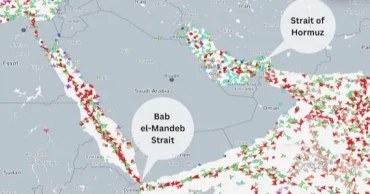
Iran threatens to widen maritime pressure
Iran’s parliamentary speaker, Mohammad Bagher Qalibaf, issued a veiled threat late Friday to disrupt traffic through a second strategic waterway in the region, the Bab el-Mandeb.
The strait, 32 kilometers (20 miles) wide, links the Red Sea with the Gulf of Aden and the Indian Ocean. More than a tenth of seaborne global oil and a quarter of container ships pass through it.
“Which countries and companies account for the highest transit volumes through the strait?” Qalibaf wrote.
More than 1,900 people have been killed in Iran since the war began.
In Gulf Arab states and the occupied West Bank, more than two dozen people have died, while 19 have been reported dead in Israel and 13 U.S. service members have been killed. In Lebanon, more than 1,400 people have been killed and more than 1 million people have been displaced. Ten Israeli soldiers have died there.
6 months ago