BD-China
Bangladesh's strategic location provides significant opportunities to strengthen regional connectivity: PM’s Adviser
Emphasising the growing importance of regional connectivity, Prime Minister's Foreign Affairs Adviser Humaiun Kobir on Monday said investments in transport infrastructure, aviation and digital networks are key drivers of economic growth and stronger people-to-people contacts.
"Bangladesh's strategic location provides significant opportunities to strengthen regional connectivity and expand cooperation in trade, tourism, investment and cultural exchanges," he said, noting that Bangladesh welcome greater collaboration with China and other international partners in advancing sustainable infrastructure, aviation, tourism and innovation for the benefit of the peoples.
The Adviser stressed that future prosperity will depend not only on economic success but also on the quality of institutions, social resilience and international cooperation.
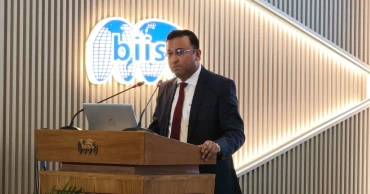
The Bangladesh Institute of International and Strategic Studies (BIISS) hosted the joint training programme titled "2026 Comparative Governance Forum" at the BIISS Auditorium.
Vice-President of Fudan University Prof Chen Zhimin and Chinese Ambassador to Bangladesh Yao Wen attended the opening ceremony of the joint training programme as special guests. Director General of BIISS Major General Ridwanur Rahman also spoke.
"The countries of the Global South are becoming increasingly influential in shaping global governance and sustainable development," Kobir said while speaking as the chief guest.
He said Bangladesh believes the international system must be more inclusive, rules-based and responsive to the aspirations of all nations. "We support multilateralism, peaceful dialogue and international cooperation as the most effective means of addressing common global challenges."
The Adviser said lasting progress is achieved when nations invest in knowledge, trust and partnerships built on mutual respect.
"Economic growth creates prosperity, but wisdom, cooperation and mutual understanding are what ultimately secure peace and sustainable development," he said.
The Adviser underscored the importance of deepening Bangladesh-China cooperation through knowledge sharing, dialogue and mutual learning, saying stronger partnerships are essential to addressing increasingly complex global challenges.
He said the initiative reflects the shared commitment of both countries to strengthening academic and institutional cooperation.
"I would like to acknowledge the valuable support of the Embassy of the People's Republic of China and all our partner institutions. This forum reflects our shared belief that dialogue, knowledge and mutual learning remain indispensable in addressing the increasingly complex challenges of our time," he said.
The Adviser said Bangladesh has much to learn from China's development experience while also sharing its own strengths in public policy and governance.
"Comparative governance calls for a comparative perspective on the governance systems of both countries. We can learn tremendously from the People's Republic of China. At the same time, there are areas where Bangladesh has performed well, and we should continue to build on those achievements," he said.
Describing China as one of the world's most remarkable development success stories, the adviser noted that the country has lifted around 800 million people out of extreme poverty over the past four decades through sustained reforms and economic transformation.
"China is a tremendous example of development over the last four decades. It has lifted nearly 800 million people out of extreme poverty through one of the most successful poverty alleviation programmes in history and has implemented major market reforms that have transformed its economy," he said.
At the same time, Kobir said Bangladesh has earned international recognition in several important areas, particularly disaster risk reduction and climate resilience.
"Bangladesh has become internationally recognised for reducing disaster risks and protecting lives. However, climate change is a global challenge that requires global solutions. We must continue to advocate for stronger multilateral cooperation, enhanced climate finance, technology transfer and greater support for vulnerable developing countries," he said.
Expressing optimism about the programme, he said the discussions over the coming days would generate new ideas, strengthen academic and institutional cooperation and further reinforce the enduring friendship between Bangladesh and China.
Chinese Ambassador to Bangladesh Yao Wen said challenges such as maintaining "political unity and social stability" under complex circumstances, breaking through the bottleneck of a single-industry structure, and creating a more favorable external environment are important issues that need to be addressed in Bangladesh’s governance journey.
He said Prime Minister Tarique Rahman’s people-centered, pragmatic, and efficient governing style has brought a fresh look to national governance.
The envoy said President Xi Jinping emphasised that no matter how the world changes, China will not waver in its commitment to the overall direction of China-Bangladesh friendly relations, and will always be a trustworthy good friend, good neighbour or and good partner of Bangladesh.
"This historic height has laid a solid foundation for the next “Golden Fifty Years” of China-Bangladesh relations," Ambassador Yao said.
The Ambassador said both sides agreed to advance high-quality Belt and Road cooperation and further align development strategies.
"Important consensus was reached on comprehensive management of the Teesta River, modernisation and expansion of Mongla Port facilities, and advancing the China-Myanmar-Bangladesh Economic Corridor," he said.
The envoy said Bangladesh-China practical cooperation is steadily moving toward one with more optimised structure, broader scope, and at a higher level.
Exchanges on governance are an integral part of building a Bangladesh-China community with a shared future in the new era, he said.
Since taking office, Ambassador Yao said the new government has adhered to a development-oriented approach, focusing on improving people’s livelihoods.
In June, Prime Minister Tarique Rahman paid an official visit to China.
The leaders of the two countries jointly agreed to elevate their comprehensive strategic cooperative partnership to jointly build a Bangladesh-China community with a shared future in the new era.
They also agreed to strengthen exchanges on governance experience.
"The visit was a complete success and marked a milestone in bilateral relations," said Ambassador Yao.
"Building a China-Bangladesh community with a shared future in the new era signifies that our relationship has transcended existing frameworks of cooperation and ascended to a new strategic height, with mutual trust, shared interests, and solidarity," he added.
The courses cover topics including the Chinese practice of modernising the national governance system and capacity, the four major global initiatives, and the Global South.
The courses have three features - a strong emphasis on practice; a strong emphasis on the spirit of the times and a strong emphasis on mutual learning.
The Ambassador said exchanges on governance are precisely an important vehicle for Bangladesh and China to connect heart to heart.
He hoped that during this forum, each participant will learn with reflection - deeply consider the underlying logic behind Chinese Modernization, and in light of Bangladesh’s national conditions, explore a development path suited to Bangladesh.
"Learn with gains - acquire policy tools and practical methods in areas such as national governance, poverty reduction, and digital governance, contributing to Bangladesh’s economic and social development," Ambassador Yao said.
"Learn with action - translate what you have learned into concrete actions to modernize Bangladesh’s governance system and capacity, and become inheritors and builders of China-Bangladesh friendship," he said, wishing the Comparative Governance Forum a complete success.
1 month ago
Game isn’t over; China remains open to other countries for economic corridor: Ambassador Yao
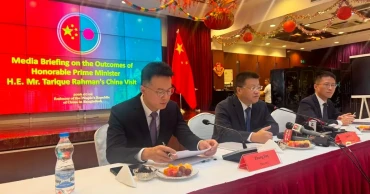
Highlighting the importance of regional connectivity, Chinese Ambassador to Bangladesh Yao Wen on Thursday said China is determined to build an economic corridor with Bangladesh and Myanmar, stressing that the game is not end here and they remain open to other countries to join.
“This cooperation is not the end of the game. We are open, and we welcome other countries if they are ready (to join). But it is up to them to decide whether they want to be part of it or whether they prefer to wait and see. China is determined to work with Bangladesh and Myanmar to build the economic corridor,” he said while responding to a question during a media briefing at the Embassy of China.
Ambassador Yao made the remarks when his attention was drawn to a corridor originally conceived in 1999 as the Bangladesh-China-India-Myanmar (BCIM) Economic Corridor under the BCIM Forum.
“I believe Myanmar also wants to have this sort of cooperation and our three countries can construct this connectivity (economic corridor).”
The two sides, during the just-concluded visit of Prime Minister Tarique Rahman to China, discussed proposals to strengthen regional connectivity, particularly multimodal transport links from Kunming to Bangladeshi ports, as well as China’s proposal for the China-Bangladesh-Myanmar Economic Corridor.
Responding to a question, Ambassador Yao said the issue of building an Economic Corridor is not new and there were discussions on Bangladesh-China-India-Myanmar (BCIM) Economic Corridor but there had been no progress.
Director at the Embassy Zhang Jing and Counselor Song Yang were also present at the media briefing that described the visit as a "complete success."
"It's a complete success. It's a milestone in Bangladesh-China relations which reached a new strategic height," said the Ambassador.
“The visit has injected strong momentum into the future development of China-Bangladesh relations. The visit was a complete success. It is a milestone in the history of China-Bangladesh relations,” he said.
The Ambassador said a new level of trust developed between the two countries with this visit and described the proposed Bangladesh-Myanmar China Economic Corridor as a new strategic opportunity.
The two sides also agreed to explore new options for regional connectivity, including direct connectivity between Bangladesh and China, and the development of the China-Myanmar-Bangladesh Economic Corridor.
“We believe these initiatives will open up new strategic opportunities for Bangladesh's economic development,” the envoy said.
Teesta: Most Closely Watched Issue
Ambassador Yao said the Teesta River Comprehensive Management and Restoration Project (TRCMRP) was highlighted during the visit as livelihoods of millions of people are involved. "Teesta is a Bangladesh project. It's your project," he added.
The envoy said the Teesta project has been one of the most closely watched issues. “During the visit, the Prime Minister met with Chinese Minister of Water Resources Li Guoying. The two sides had in-depth exchanges on water resources cooperation.”
Ambassador Yao said China is ready to strengthen practical cooperation with Bangladesh in water resources planning, river management, flood prevention and disaster reduction.
“We will also enhance capacity building and personnel training in the water sector. Let me make one point very clear. China's commitment to the Teesta river project remains unchanged,” he said.
The envoy said China will continue to provide support and assistance within its capacity for the Teesta project and support experts from both countries in expediting the feasibility study and related work.
He also talked about the key achievements of the Prime Minister's visit to China - the launch of a strategic dialogue at the foreign minister level and the exploration of a "2+2" dialogue mechanism covering diplomacy and defence.
Talking about defence cooperation, Ambassador Yao said Bangladesh-China cooperation is comprehensive and the defence cooperation is part of that. He declined to make comments on any specific defence purchase.
“We also agreed to establish a strategic dialogue mechanism between the two foreign ministers and explore a "2+2" dialogue mechanism on diplomacy and defense,” he said, noting that these arrangements will provide a stronger and more stable platform for strategic communication between the two countries.
The two sides agreed to maintain the momentum of high-level exchanges, enhance mutual learning on governance, and strengthen cooperation between governments, legislative bodies and political parties.
The Ambassador said China has all along attached great importance to the development of Bangladesh-China relations and stayed true to the policy of good-neighborliness and friendship toward all the people of Bangladesh.
“No matter how the world changes, China will not waver in its commitment to the overall direction of China-Bangladesh friendly relations, and will always be a trustworthy good friend, good neighbor and good partner of Bangladesh,” said the Chinese envoy.
He said China welcomes Bangladesh's participation in the group of friends of the Global Development Initiative (GDI) and stands ready to work with Bangladesh to advance the MoU on promoting the implementation of the GDI.
The GDI focuses on humanity’s shared development needs, aligns closely with the United Nations 2030 Agenda for Sustainable Development, and addresses key global development challenges.
Reaching a New Strategic Height
Ambassador Yao said the most significant outcome of the visit was the decision by the two sides to elevate the Bangladesh-China Comprehensive Strategic Cooperative Partnership to jointly build a ‘China-Bangladesh Community with a Shared Future in the New Era.’
He said this represents the highest level of China's relations with its friendly neighbors in Asia.
This was the Prime Minister's first visit to China since taking office. It was also the first formal meeting between the leaders of the two countries since the formation of Bangladesh's new government.
“The leaders of the two countries had candid and productive discussions. They reached important new consensus and sent a clear message of stronger communication, deeper mutual trust and closer cooperation,” said Ambassador Yao.
He said the visit has opened a new chapter in Bangladesh-China friendship. “As our two countries embark on the next golden fifty years of bilateral relations, China stands ready to work with Bangladesh to fully implement the important consensus reached by our leaders and the outcomes of the visit.”
Together, the envoy said, they will translate these outcomes into tangible results and stronger momentum for economic and social development, bringing greater benefits to our two countries and our two peoples.
Bangladesh and China signed 17 bilateral instruments, including MoUs, agreements, a joint action plan, and an agricultural trade protocol, to further strengthen bilateral relations.
The two sides signed an MoU on promoting the implementation of the Global Development Initiative (GDI).
Another MoU on exchanges and cooperation between the Bangladesh Nationalist Party (BNP) and the Communist Party of China was also signed.
2 months ago
Bangladesh, China seek to deepen cultural cooperation, strengthen diplomatic ties
Chinese Ambassador Yao Wen on Thursday paid a courtesy call on Bangladesh’s Minister for Cultural Affairs Nitai Roy Chowdhury and State Minister Ali Newaz Mahmood Khyom, where the two sides discussed ways to enhance cultural cooperation and strengthen diplomatic relations between China and Bangladesh.
During the meeting, they held in-depth discussions on expanding cultural exchanges and cooperation between the two countries.
Ambassador Yao congratulated Minister Nitai and State Minister Khyom on assuming their new posts. He noted that both China and Bangladesh are ancient civilizations with a profound and long-standing friendship and close cultural ties, which have effectively promoted mutual understanding and affinity between the two peoples. China is ready to continue deepening practical cooperation in the cultural field with Bangladesh, promote mutual learning among civilizations, and provide stronger people-to-people support for the China-Bangladesh Comprehensive Strategic Cooperative Partnership.
The Bangladesh side extended its appreciation to Ambassador Yao for his congratulations and thanked China for its long-standing support for Bangladesh's cultural development.
They expressed their willingness to work hand in hand with China to further promote cultural exchanges and industrial cooperation, injecting new vitality into the long-standing friendship between the two countries.
6 months ago

Any attempt to undermine Dhaka-Beijing ties will fail: China
Praising Bangladesh’s ‘Bangladesh First’ policy, Chinese Ambassador to Bangladesh Yao Wen on Sunday said any attempt to undermine cooperation between China and Bangladesh, or with any South Asian country, is doomed to fail.
“Our cooperation is not targeting any third party, and should not be affected by any foreign forces,” he told reporters at the Ministry of Foreign Affairs while responding to a question after his separate meetings with Foreign Minister Dr Khalilur Rahman and State Minister for Foreign Affairs Shama Obaed.
The Ambassador said Dhaka and Beijing have been engaged in long-standing discussions over the Teesta River Comprehensive Management and Restoration Project, expressing the hope that work on the long-awaited initiative will begin soon.
“That is also one of my expectations. We could work on it. We will continue to work on it,” he said when a reporter wanted to know whether he is hopeful that the project will commence soon.
The Chinese Ambassador described the recently held election as smooth and orderly and found it as the victory of democracy.
He said the high-level visits between the two countries would continue.
Ambassador Yao said as a friendly neighbor and a comprehensive strategic cooperative partner of Bangladesh, China attaches great importance to deepening relations with Bangladesh, and supports the new government under the leadership of Prime Minister Tarique Rahman in exercising smooth governance.
India seeks stronger people-centric ties with Bangladesh: Envoy
6 months ago
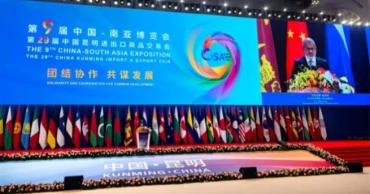
China-South Asia Expo kicks off focused on trade and regional connectivity
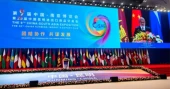
The 9th China-South Asia Expo kicked off on Thursday in Kunming, the capital of southwest China's Yunnan Province, with a focus on strengthening trade ties, fostering innovation, and deepening regional cooperation.
Under the theme "Solidarity and Coordination for Common Development," the five-day event has attracted participants from more than 70 countries and international organisations, including Bangladesh.
All South and Southeast Asian nations participated in the event, reports CGTN.
Across the expansive expo pavilions, exhibitors from the region are engaging in business matchmaking, showcasing their products, and exploring new partnerships.
"China is a close friend of Bangladesh. For a very long time, China has had a lot of investments in our country. And the new interim government has also provided many opportunities for foreign investors," said Mohammad Foyshol Azad, Chairman of the Trading Corporation of Bangladesh (TCB).
He said investors have the opportunity to invest in the agriculture and other industrial sectors, such as the ready-made garment (RMG) sector.
"We hope that in the future, the collaboration between China and Bangladesh will be even stronger and more friendly," said Azad.
Alimuzzaman, an exhibitor from Bangladesh, attending the event for the first time.
1 year ago
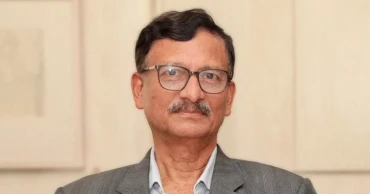
Foreign Adviser off to China on maiden visit for boosting economic ties
Foreign Affairs Adviser Md Touhid Hossain on Monday afternoon left Dhaka for China to discuss a wide range of issues and ways to strengthen Dhaka's economic partnership with Beijing.
China has already invited Chief Adviser Prof Muhammad Yunus to pay an official visit to Beijing in March this year with Dhaka seeing it positively, said a diplomatic source.
Bangladesh and China are preparing to celebrate the 50th anniversary of their diplomatic relations in 2025.
Adviser Hossain is paying the visit at the invitation of Chinese Foreign Minister Wang Yi in what is described as “very important first bilateral visit” after the formation of the interim government led by Nobel Laureate Dr Yunus in August last year.
He will have engagements with Chinese officials on January 21-23. He is scheduled to return home on January 24.
Bangladesh is likely to request China to lower loan interest rates, extend repayment terms by 30 years and waive commitment fees to bolster economic cooperation.
Deeper ties with Russia sought in meeting with new ambassador
The issues along with budget support will come up in a big way during Hossain's visit.
"...all economic issues will come up for discussion. Some issues are very important. Bangladesh's trade and economic relations with China are very important," the adviser said while talking to reporters at the Ministry of Foreign Affairs last week.
He said they will discuss budgetary support, explore China's assistance, expedite loan disbursement for Bangladeshi projects, and seek a full withdrawal of the commitment fee.
A commitment fee in China is a charge made by a lender to a borrower for keeping a line of credit available.
Bangladesh sees Hossain’s maiden bilateral visit to China as a “great opportunity” to further strengthen and deepen the bilateral relations with Beijing giving an outline for the future cooperation.
Asked about the Global Development Initiative (GDI), the adviser said there are some issues that will continue to be discussed with a positive approach and noted that Bangladesh’s relationship with China is not just government-specific.
The GDI is a multilateral development initiative proposed by Chinese President Xi Jinping in 2021.
1 year ago
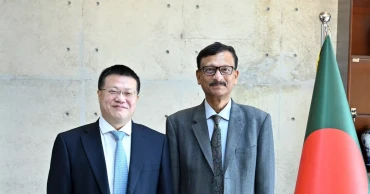
Beijing ready to sign hydrological info exchange plan with Dhaka: Ambassador
China on Sunday conveyed to Bangladesh that they are ready to sign "implementation plan" on exchange of hydrological information with Bangladesh which was previously sent by the Bangladesh side.
Chinese Ambassador to Bangladesh Yao Wen met Foreign Affairs Adviser Md Touhid Hossain at the Ministry of Foreign Affairs and informed him that the Chinese side is ready to sign this document during the bilateral visit of Adviser Hossain to China.
The Ambassador also apprised the Foreign Adviser that China is "seriously considering" to lower down its interest rates for Bangladesh.
The Chinese Ambassador said that China "will do everything" for the benefit of the people of Bangladesh.
During the meeting, the Chinese Ambassador briefed the Adviser regarding his first ever upcoming bilateral visit to China scheduled to take place on January 20-24, said the Ministry of Foreign Affairs.
‘Will lead consensus-building commission’, Dr Yunus tells Australian envoy
Both sides hoped that the upcoming visit of Foreign Adviser to China will open up a new chapter of cooperation between the two friendly countries.
The Ambassador touched upon the issues to be discussed during the official talks led by the Foreign Adviser of Bangladesh and his Chinese counterpart.
While highlighting the importance of the visit, the Ambassador informed the Adviser that the people of his country are eagerly waiting to welcome the Foreign Adviser to China.
China is the all-weather, time-tested friend of Bangladesh which firmly stands with the people of Bangladesh irrespective of its government, he said.
He reaffirmed that China respects the sovereignty and territorial integrity of Bangladesh and reiterated that China would continue its support for the stability, reforms and democratic transition and development initiatives of Bangladesh.
Standing beside Bangladesh with the spirit of good friend and neighborhood, China said it will continue its support for the early repatriation of the forcibly displaced Myanmar nationals (FDMN) to their motherland in Myanmar.
Shedding light on the importance of making roadmap for the repatriation of the FDMN (The Rohingyas) to Myanmar, the Foreign Adviser said that Bangladesh expects China to play a very strong and proactive role helping Bangladesh for the repatriation of the FDMN (The Rohingyas) to Myanmar.
Referring to the bilateral relations with China, the Foreign Adviser reiterated that Bangladesh always supports ‘One China Principle’ and in the eve of celebrating the 50th anniversary of the establishment of diplomatic relations between Bangladesh and China, this visit will strengthen deep understanding , friendship, and vibrant partnership advancing the strategic as well as technical cooperation between the two nations.
The Foreign Adviser said that Bangladesh appreciates 100% Duty Free Quota Free market access of Bangladeshi products to China and expressed his hope that this market access would continue till 2029 (after the post-LDC period for 03 years).
Russian Ambassador reaffirms support for stronger Bangladesh-Russia ties
In response, the Ambassador said that along with mangoes, this year Bangladeshi guava and jackfruits will also have the market access to China.
The Adviser asked for Chinese high tech energy efficient supports for developing fruits storage and preservation capacity in Bangladesh.
He also underscored the importance of expanding bilateral cooperation in various sections.
The Adviser sought Chinese support for adding up more railway coaches for the passengers under capacity building initiatives of Bangladesh Railways.
Referring to the importance of cooperation in health sector, the Foreign Affairs Adviser mentioned that Bangladesh is ready to provide land and other logistics for setting-up a full-fledged tertiary level Chinese hospital in Purbachal and also requested China to designate at least three to four top notch hospitals in Kunming so that Bangladesh nationals can go there and get better treatment.
The Foreign Adviser thanked China for their engagements with the development initiatives of Bangladesh and expressed his hope that the injured students will soon get their treatment in China.
1 year ago
.jpg)
Dhaka, Beijing to work with patience to achieve dev goals: Momen
Bangladesh and China have agreed to work with “patience” to achieve their development goals ignoring “provocation and obstruction” noting that peace and stability are required for a country’s further progress.
While briefing media at the Ministry of Foreign Affairs on Sunday afternoon, Foreign Minister AK Abdul Momen described Chinese Foreign Minister Wang Yi’s just concluded Dhaka visit as “politically very significant.”
The Chinese side assured that they will always remain beside Bangladesh in its development journey and will work together to take the existing good relations to a new height, he said.
Responding to a question, Momen said there has been discussion on the Global Development Initiative (GDI) but no talks on Global Security Initiative (GSI), Belt and Road Initiative (BRI) or new Chinese loans.
4 years ago

China is a trusted partner in Bangladesh’s socio-economic development: Hasina
Describing China as a trusted partner in socio-economic development of Bangladesh, Prime Minister Sheikh Hasina stressed the need for exploring more avenues to take the strategic partnership between the two countries to a new height.
“We would like to explore more avenues to take the Bangladesh-China strategic partnership to new heights and also work together to address the regional and global issues for peace, security, stability and development,” she said.
The Prime Minister said this in her prerecorded message shared on Thursday afternoon at a function arranged, marking 100 years of founding of the Communist Party of China (CPC).
5 years ago