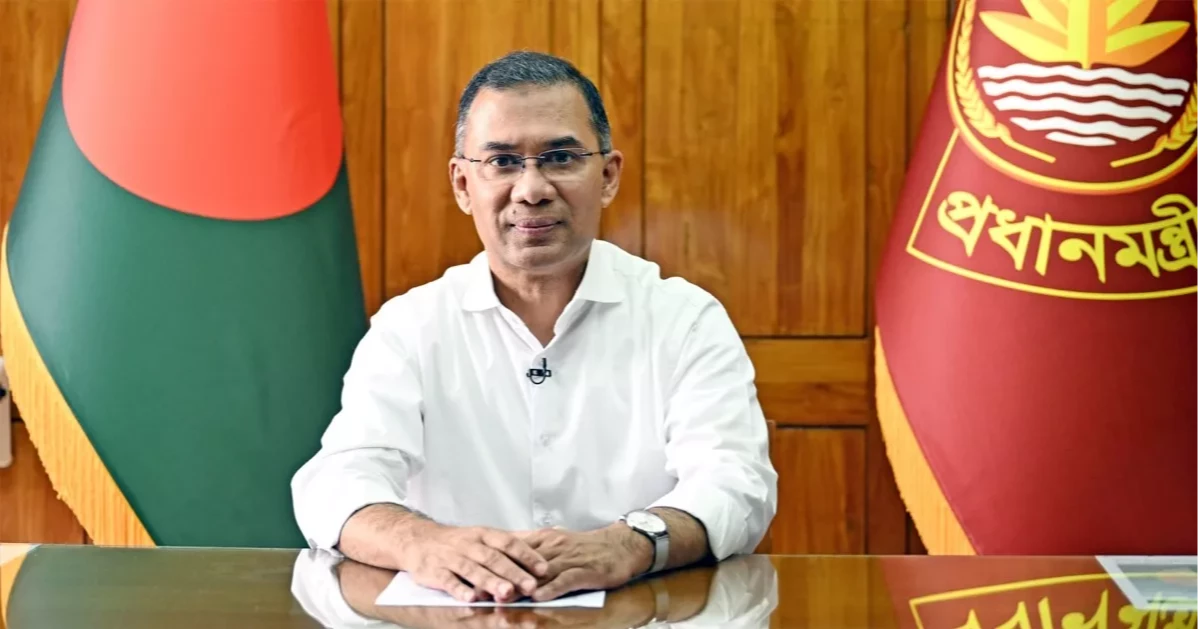
The first 100 days of the BNP government have delivered a message of hope and positive change to the nation through reforms, policy initiatives and citizen-focused governance efforts, according to an e-book published by the Prime Minister’s Press Wing.
Prime Minister’s Additional Press Secretary Atikur Rahman Rumon said the e-book – released on Wednesday marking the government’s first 100 days in office –presented in detail the activities of different ministries, key decisions and progress in implementing various programmes during the period under the leadership of Prime Minister Tarique Rahman.
“It is a document of the government’s first 100 days in office,” he said.
Rumon said the government believes its first 100 days have brought a message of hope and positive change to the nation.
“Different programmes and initiatives taken by the government have already started creating visible impacts on public life and society,” he added.
BNP Chairman Tarique Rahman assumed office as Prime Minister on February 17 after his party won the 13th parliamentary election held on February 12 by a landslide.
The PM’s Press Wing said the e-book will be updated regularly and made available online for reading and downloading.
According to the introduction to the e-book, leadership is judged not only by election promises but also by how quickly those promises are turned into practical action plans.
It also said in Bangladesh’s new political reality, Prime Minister Tarique Rahman’s election pledges and their rapid implementation have become a topic of national discussion.
According to the e-book, the government assumed office amid political instability, economic pressure, weak law and order, foreign currency reserve challenges and a slowdown in investment and employment.
Despite those challenges, the publication said, the government has demonstrated quick policy decisions, administrative discipline and signs of stability in economic management during its first 100 days.
The e-book also highlighted several personal and administrative decisions made by the Prime Minister that drew public attention.
It said Tarique Rahman’s decisions to limit VVIP protocol, use a private residence instead of an official one, travel in personal vehicles and bear his own fuel expenses reflected a culture of restraint, accountability and simplicity in public office.
The publication also highlighted his direct engagement with ordinary people during visits across the country, saying citizens from different age groups and professions gathered spontaneously to see and interact with him.
It described his open question-and-answer session with students at Dhaka University as an example of participatory political culture, where students discussed issues, including education, employment, technology and the future of Bangladesh, directly with the Prime Minister.
The e-book also said Tarique Rahman has frequently broken with traditional protocol to speak with children, receive gifts from them and interact with farmers, workers and labourers “as an ordinary citizen,” which, it claimed, strengthened his image as a people-oriented leader.
It also referred to several symbolic actions, including waiting at traffic signals, walking to office and participating in programmes among ordinary citizens after office hours, describing them as examples of participatory and citizen-focused leadership.
According to the publication, the government also introduced Saturday office activities as part of efforts to increase administrative continuity and service efficiency.
The e-book said the Prime Minister encouraged young innovators by using locally developed technologies and vehicles, describing it as support for domestic innovation and youth-led initiatives.
Summarising the government’s first 100 days, the publication said the administration prioritised social and economic support programmes, digital reforms in administration and the judiciary, and long-term infrastructure and economic planning despite challenges such as inflation, energy pressures, global instability and employment constraints.
It also acknowledged that controlling commodity prices, ensuring energy security, increasing investment and expanding employment remained major challenges.
The PM’s Press Wing said many programmes were still at the initial implementation stage, but added that the government has pledged to build a more technology-driven, accountable and service-oriented state.
The e-book concluded with a quote attributed to Prime Minister Tarique Rahman: “Ensuring service to the people is the sacred responsibility of this government.”